
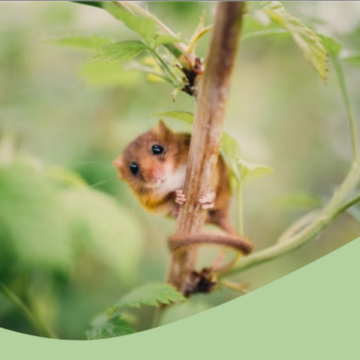
Hazel dormice are one of the UK’s most widely protected mammal species and are highly sensitive to habitat loss, fragmentation and changes in woodland and hedgerow management. Effective survey, mitigation and management require a thorough understanding of dormouse ecology, habitat requirements, legislation and the practical measures needed to conserve populations and maintain habitat connectivity.
The Competency Standard for Hazel Dormouse Survey, Mitigation and Management provides a structured framework for professionals undertaking dormouse-related work. It defines the knowledge, skills and experience required to survey, assess, mitigate impacts on, and manage hazel dormice and their habitats to a consistent professional standard.
The framework covers a broad range of dormouse ecology practices, including knowledge of legislation and licensing, habitat assessment, survey design and implementation, impact assessment, mitigation planning, habitat management and reporting. It supports practitioners at all stages of their professional development, from those developing foundational skills through to specialists leading complex projects and providing expert technical advice.
Purpose of the Framework
This competency standard has been developed to:
- Promote high standards of professional practice in hazel dormouse survey, mitigation and management.
- Support career development and progression for ecological practitioners working with protected mammals.
- Provide a benchmark for competency assessment and professional recognition.
- Encourage consistency in survey design, impact assessment, mitigation planning and habitat management.
- Ensure practitioners understand their responsibilities relating to legislation, licensing, species welfare, health and safety, and biosecurity.
Raising Standards
Understanding what good practice looks like and how to develop your competence in different areas of ecological survey, management and mitigation is fundamental to professional development and progressing your career.
CIEEM has been working with volunteer members to develop taxa-specific competency standards that tell the practitioner what they need to know and what they should be able to do in order to demonstrate increasing levels of competence. These competency standards are derived from the CIEEM Competency Framework and have also drawn on the Ecological Competences: Skills and Process document published by Atkins in 2019.