
The Physical Environment – the system underpinning, and being changed by, biodiversity
Dr Bruce Lascelles
Guidance on ecological restoration projects to rebuild nature across the UK and Ireland is being prepared by a CIEEM working group established by the Habitat Creation and Ecological Restoration SIG. Rebuilding Nature through evidence-based projects can help meet the unprecedented challenges of biodiversity loss, habitat fragmentation and climate change we face today.
The ecological world does not exist in isolation. It is formed on and within the physical environment and ecological characteristics are driven by the nature both of individual components of the physical environment and in relation to how it functions as a system. In turn, the ecological world influences how the physical environment functions, for example how much carbon is stored in soils and the speed at which rainfall reaches watercourses.
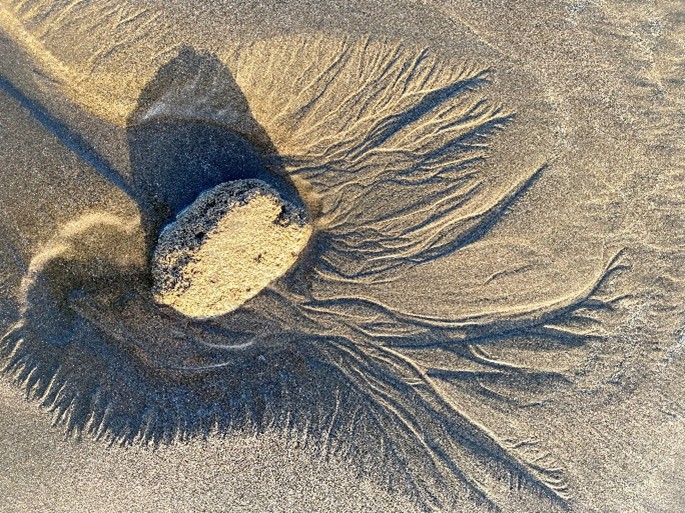
The physical environment is also not static. Changes are occurring at all temporal and spatial scales, and many of these changes will be critical to the biodiversity a given landscape supports. Think about the slow weathering over millennia of rocks to release particles and nutrients as part of soil formation and how this influences habitat type, and the rapid and daily changes in some coastal systems as a result of erosion and deposition, constantly creating niches for a range of habitats and species.
The Physical Environment Overarching Topic (download it here) sets out the key components of the physical environment system and explains why these aspects are critical to understanding the spatial distribution of habitats and species and how an understanding of this system must be central to the design and delivery of sustainable habitat creation, restoration and translocation projects.
The guidance covers aspects around geology (both solid and drift), landform, climate, hydrology and hydrogeology, geomorphology and soils. It provides information on these key aspects of the physical environment and the relevance they have to the design, planning and implementation of ecological restoration projects.
As with any system, changing one component will result in changes elsewhere, and so it is fundamental to understand the system and the implications for the changes planned. It is likely it will not be possible to maximise everything, and the focus should be on optimisation based on the project aims, stakeholder engagement and delivering positive change for the communities within which you are working. But it should be possible (and essential), based on an understanding of the system (including our place within it), to deliver sustainable ecological restoration alongside other benefits – wetland creation alongside flood risk reduction; urban green spaces alongside health and wellbeing benefits as examples.
We hope that the topic provides useful prompts for your project planning, and we are happy to receive comments for future iterations. Please contact the Working Group via the Ecological Restoration SIG on er@CIEEM.net
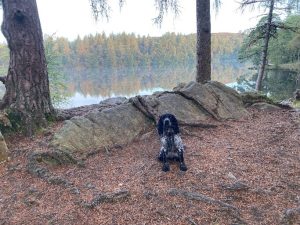
Slow physical, chemical and biological weathering creating shallow soils, Snowdonia (Photo Credit: Bruce Lascelles)

Micro-scale patterns in sand due to the presence of a small stone which will change with each tidal cycle, Saunton Sands, North Devon (Photo Credit: Bruce Lascelles)
 Dr Bruce Lascelles
Director – Sustainable Land Management, Arcadis
Bruce is a soil scientist and a strong advocate for soils and the physical environment. Bruce is President Elect of the International Union of Soil Sciences, a member of the Global Soil Security Think Tank and a Fellow of the British Society of Soil Science. Bruce focuses on understanding soils and the interaction of the physical and biological worlds in relation to land use change and nature recovery.