
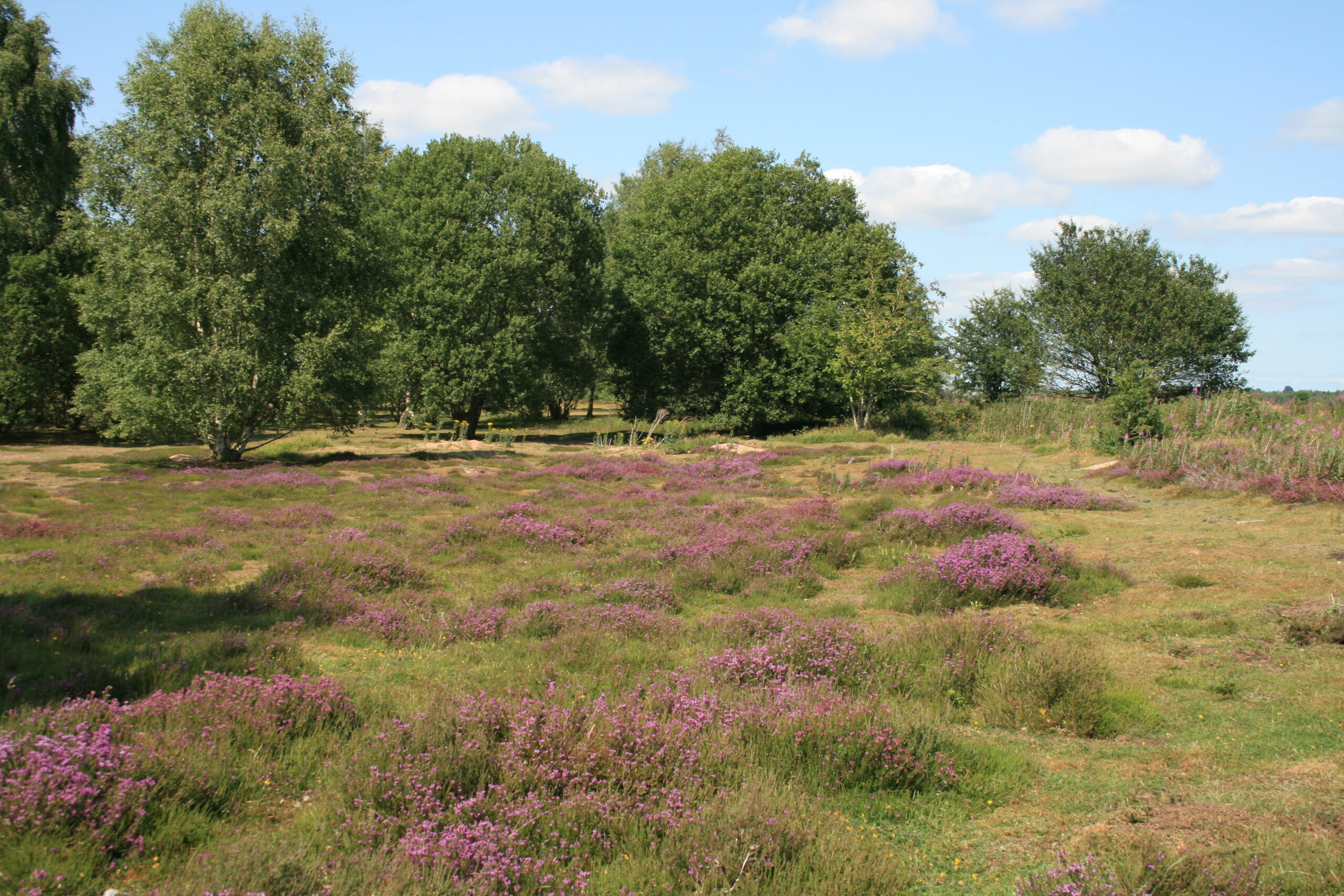
New Guidance on Restoration of Heathland in the UK and Ireland
Written by Mike Gibbs CEcol MCIEEM
CIEEM’s Ecological Restoration Special Interest Group has been developing best practice guidance on Rebuilding Nature. Guidance for specific habitats is being produced along with documents on overarching topics covering planning, scale, ecosystem services, the physical environment, and monitoring. The latest of these short guidance documents is on the restoration of heathlands.
There has been a dramatic loss in heathland in recent times. For instance, only around 20% of the area of lowland heathland present in the UK in 1800 remains today. Therefore, restoration and maintenance of existing heathland is a conservation priority, and indeed all heathland habitats (upland, lowland and montane) are Annex 1 habitats as well as UK Priority Habitats. Heathlands are threatened by mis-management, neglect, change in land use, disturbance and development, and are highly vulnerable to loss of ecological value.
In the UK and Ireland, many heathlands are accessible to the public and are important for local communities providing recreational access to open countryside and enjoyment of wildlife. The cultural association of heathland with human use goes back thousands of years so they are extremely important in a historical context. Heathlands also provide ecosystem services and contribute to carbon sequestration, water retention and flood prevention.
What is Heathland?
Heathland is a unique ecosystem, found on nutrient poor soils in the lowlands and uplands, formed from centuries of anthropogenic disturbance and exploitation. It is a dynamic landscape found in some of the harshest environments in the UK and Ireland. A diversity of heathland habitat types occur on sandy and gravelly soils in the lowlands, on sand dunes, in mosaics with acid grassland or calcareous species, in the uplands (moorland), and in montane regions.
Heather Calluna vulgaris is the primary characteristic species of heathland, but a variety of other rare ericaceous species can be present, which are characteristic of different regions of the UK and Ireland. Gorse Ulex spp. and bracken Pteridium aquilinum are often abundant, but trees such as birch Betula spp., oak Quercus spp. and Scots pine Pinus sylvestris, are much more sparse and scattered than in a wooded landscape.
Its value for biodiversity is found in the many plants, animals and fungi that are adapted to the open habitat, which is the result of the long history of exploitation that heathlands have experienced as a resource for firewood, peat, heather, etc. Except in exposed montane or coastal environments, heathland is reliant on disturbance for its existence, without which colonisation of tree saplings, gorse and bracken would occur resulting in succession to scrub and woodland.
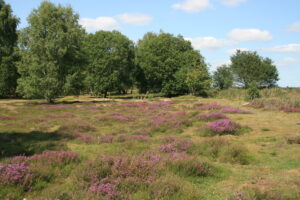
Heathland restoration at Prees Heath Reserve, Shropshire. Photo credit: Phil Putwain.
What does the guidance cover?
The guidance covers a range of different techniques for restoring, creating and translocating heathland habitat, such as the following:
- Planning and objective setting – selecting a site or understanding an existing one, taking into account history, soils, habitat, locality, use, etc.
- Selecting techniques, from restoration management to uncover a dormant seedbed to methods of collecting and introducing heather seed or plug plants.
- Site preparation, including tree and shrub removal, as well as dealing with humic layer, fertile soils and bare mineral substrates.
- Pros and cons and methods for translocation of heather turves or topsoil.
- Aftercare management to achieve successful outcomes.
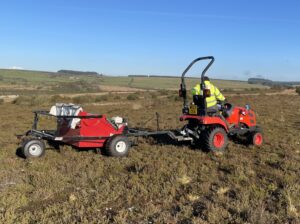
Brush harvester for collecting seed of heather and grasses. Photo credit: Ian Davies
The guidance also summarises the topics to consider during planning and undertaking a heathland restoration, creation or translocation project, with a focus on monitoring for success and the potential problems encountered. References are provided throughout along with examples of case studies and web links to where you can find more detailed information.
Successful restoration and creation projects can protect and enhance this precious habitat, and increase the total area of heathland available.
Where you can find the guidance
The documents are published in digital online format on the CIEEM website and freely available (search for: Rebuilding nature: Good practice guidance for ecological restoration or use this link).
We hope that the guidance will be useful for ecologists and land managers and we would welcome feedback and new ideas. Contact us at er@cieem.net.
Mike Gibbs is a CIEEM member and a co-author of the Heathlands habitat guidance, which forms part of the Rebuilding Nature guidance series on ecological restoration.

Mike Gibbs CEcol MCIEEM
Thank you to AtkinsRealis for sponsoring ‘Habitats: Heathlands (Good Practice Guidance for Ecological Restoration)’
