
Member Network Updates – March 2026
South East England Geographic Section
Revitalising the Southeast: Connecting Members and Building Momentum
The South East Committee is delighted to reintroduce ourselves to members across the region. As one of CIEEM’s largest regional networks, we’re here to connect, support, and inspire ecological and environmental professionals at every career stage. Over the past year, our committee has welcomed several new members alongside familiar faces, all bringing fresh energy and ideas to strengthen engagement across the Southeast.
Who we are
Our committee represents a broad spectrum of professional backgrounds — from consultancy and academia to the civil service and beyond. This diversity helps us reflect the varied experiences of our members and ensures our activities remain relevant and inclusive.
What’s new and upcoming
We’ve been busy planning a calendar of events designed to bring people together — both in person and online. From informal networking meetups and CPD field days to themed webinars on current topics such as biodiversity net gain, nature recovery, and early career pathways, we’re excited to offer opportunities for learning, collaboration, and community building. We’re also exploring ways to highlight local projects and success stories from our members, showcasing the incredible work happening throughout the region.
Looking ahead to 2026, we aim to host more hands-on workshops, site visits, and cross-regional collaborations to help members expand their networks and practical experience.
How to get involved
We’re keen to hear from you — whether you have ideas for events, would like to share a project, or are interested in joining the committee itself. Being part of the Southeast Committee is a rewarding way to connect with fellow professionals, contribute to the sector’s growth, and help shape the support available to our regional members. Benefits include:
- Expanding your professional network
- Developing new skills and confidence
- Giving back to the profession and supporting peers
Looking ahead together, we’re building momentum for an exciting year ahead — reconnecting our community, sharing knowledge, and keeping the Southeast at the heart of CIEEM’s mission to champion professional excellence for nature. For more information on getting involved with the South East England Member Network committee please email MemberNetworks@cieem.net
Early Careers Special Interest Group
From Catchments to Conservation: A Shared Front Against Climate Change and Biodiversity Loss
By Athena Allen (ACIEEM) (Convenor of CIEEM’s Early careers SIG), input from the CIWEM/CIEEM Joint Article Series Co-Authors
In the face of escalating environmental pressures, the climate and biodiversity crises must be addressed as one. Neither challenge can be solved in isolation; climate change drives habitat loss, while degraded ecosystems lose their capacity to regulate carbon and water cycles. Global sea levels now sit approximately 10 cm above 1993 levels, and vertebrate wildlife populations have seen a 73% average decline since 1970[1][2].
Turning high-level policy into ground-level results requires cross-disciplinary practice. This collaborative series, featuring the voices of seven CIEEM and seven CIWEM early-career members, underscores the necessity of deep, structural collaboration between the water management and ecology sectors. By networking young professionals across these disciplines, the sector can bridge the gap between hydrological engineering and ecological science to achieve landscape-scale resilience.
Collaboration in Practice: Lessons from Across the Sector
A primary theme throughout the series is the restoration and protection of ecosystems that provide multifunctional benefits. Blue carbon habitats – mangroves, seagrasses, and reefs – are identified in Article 4 as frontline defenders that sequester carbon while providing essential flood attenuation. Similarly, Article 5 champions small waters, such as ponds and headwater streams, as ecological control towers. These systems are vital for freshwater biodiversity and catchment-wide water quality, demonstrating that water management goals are functionally inseparable from ecological health.
The series also explores policy frameworks like Biodiversity Net Gain (BNG). As outlined in Article 2, BNG provides the financial mechanisms for cross-sector projects, such as river re-meandering and invasive species control. However, realising this potential requires an evolution in green skills. Article 6 argues that both sectors must foster accessible, paid pathways to cultivate a workforce capable of navigating the complexities of both water and ecology.
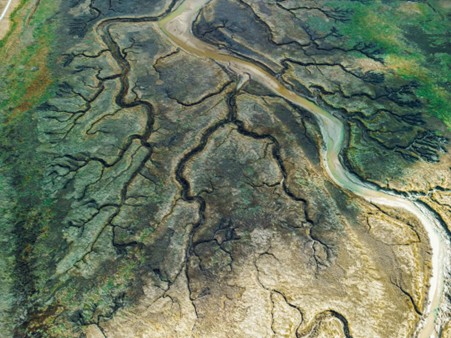
Image caption: Ecology and water management sectors must come together to mitigate the twin crises as they would to manage a river delta.
Conclusion
This joint initiative has been a powerful experience, highlighting the wealth of expertise that can be unlocked when our two sectors collaborate. By moving beyond traditional silos, we have demonstrated that the most effective solutions to the climate and biodiversity crises lie at the intersection of our disciplines. The insights shared by this cohort of early-career professionals serve as a roadmap for a more integrated, resilient future, proving that when ecologists and water managers work in tandem, the potential for nature recovery is vastly amplified.
The article series authors hope these insights spark some fresh ideas for your own work—feel free to dive into the full stories through the links below:
Article 1: Tackling the Twin Crises: A CIWEM-CIEEM Joint Article Series
Article 2: Tackling the twin biodiversity and climate crises: BNG & Nature Recovery
Article 3: Tackling the twin biodiversity and climate crises: Twin Crises, Shared Solutions
Article 5: Rethinking River Catchments: Why Small Waters Hold the Key to Biodiversity and Climate Resilience
Article 6: Enabling Success: The Way Forwards for Green Skills Within our Sector
Article 7: Nature in Action: Tackling Climate and Biodiversity Together
[1] Climate Change: Global Sea Level
[2] Living Planet Report 2024 (WWF)
Athena Allen (ACIEEM) is Marine Projects Manager at NatureBureau, a small environmental consultancy company based in the UK. Her work focuses on EU marine legislation, stakeholder engagement, and research into her speciality of choice, cephalopods. Athena is the Convenor of the CIEEM Early Careers Special Interest Group and the Secretary of the CIEEM Marine and Coastal Special Interest Group. She is also co-author of Articles 1 and 4 in this series.
Help us recognise remarkable volunteers – Submit your nomination!
From Membership Assessors to Career Mentors, to Member Networks, to Policy groups, and everything in between – we work alongside volunteers in everything we do at CIEEM, and benefit daily from the vast range of experience, expertise and enthusiasm that volunteers bring. Help us to recognise some of these amazing volunteers by submitting a nomination for the Volunteer Achievement Awards before Friday 3rd April. Nominate a volunteer here.