IPBES-12: a scientific reality check for the global economy – and a blueprint for business action on nature
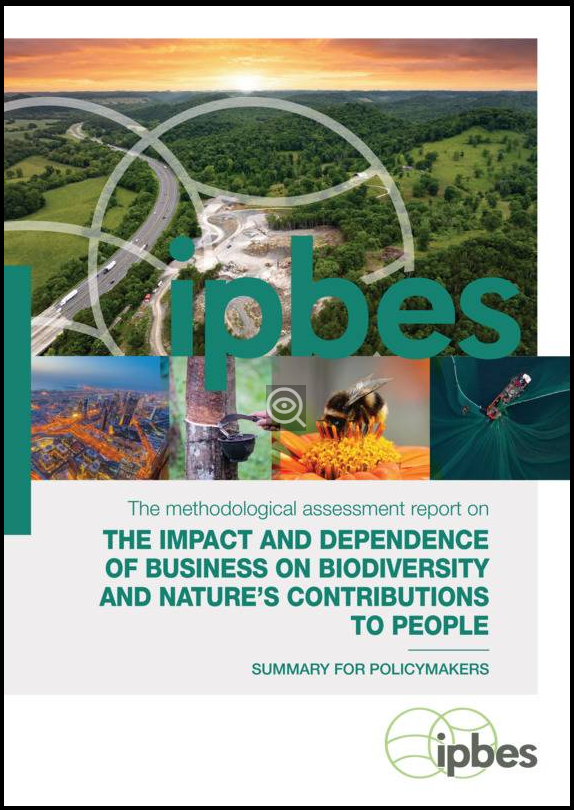 The 12th Plenary of the Intergovernmental Science-Policy Platform on Biodiversity and Ecosystem Services (IPBES-12) concluded in Manchester with the approval of a landmark Business and Biodiversity Assessment Summary for Policy-Makers, agreed by more than 150 countries.
Hosted by the UK, the meeting marked a pivotal moment in global efforts to confront nature loss and to bring the private sector squarely into the frame.
Described by the UK Government as a new “blueprint for business action on nature”, the assessment provides a summary of the scientific analysis of how businesses both depend on and impact biodiversity, and what must change if economies are to remain viable in the long-term.
Growth built on nature’s decline
The assessment places the biodiversity crisis in a long-term economic context. Between 1820 and 2022, the global economy expanded from around $1.18 trillion to $130.11 trillion (in 2011 dollars). Over that period, material living standards improved in many parts of the world but IPBES is clear that this growth has been achieved by systematically drawing down natural capital.
Since 1992, average per-capita human-produced capital has increased by around 100%, while stocks of natural capital have declined by approximately 40%. This is not an accidental side effect of growth, but a defining feature of how modern economies operate.
As reiterated during the opening of IPBES-12, nature is not external to the economy. It is the keystone infrastructure underpinning climate regulation, food systems, water security and public health – and therefore the foundation of economic stability itself.
A finance system working against nature
One of the clearest messages from IPBES-12 is how profoundly misaligned global finance remains with biodiversity goals.
In 2023, global public and private finance flows with directly negative impacts on nature totalled around $7.3 trillion. Of this, $4.9 trillion came from private finance, with a further $2.4 trillion linked to public spending on environmentally-harmful subsidies.
By contrast, only $220 billion was directed towards activities contributing to the conservation and restoration of biodiversity.
This imbalance dwarfs the often-cited “biodiversity finance gap” and helps explain why nature continues to decline despite decades of policy commitments and corporate pledges.
Business blind spots and rising systemic risk
Despite their reliance on ecosystems, businesses remain strikingly underprepared for biodiversity risk. Fewer than 1% of publicly reporting companies currently mention biodiversity impacts in their disclosures.
IPBES-12 reinforced that this is no longer simply an environmental concern, but a financial and systemic risk. At least eight countries, alongside the European Union, now have central banks that have analysed their financial institutions’ exposure to dependencies on biodiversity. Nature loss is moving rapidly into the core of risk management, financial supervision and economic resilience planning.
The Business and Biodiversity Assessment summary makes clear that voluntary action alone will not be enough. Better measurement, disclosure, regulation and accountability are essential if business activity is to align with ecological limits.
Indigenous lands, inequity and power
The assessment also highlights the deep social dimensions of nature loss. Around 60% of Indigenous lands globally are threatened by industrial development, with 25% under high pressure from resource exploitation.
This is not only an issue of justice. Indigenous peoples steward some of the most biodiverse areas on Earth, and IPBES-12 repeatedly emphasised that excluding Indigenous and local knowledge undermines effective biodiversity governance.
A UK-hosted milestone and what it delivers
The UK-hosted summit brought together scientists, businesses and governments from more than 150 countries.
Nature Minister Mary Creagh CBE MP described the agreement of the Business and Biodiversity Assessment Summary Report as a pivotal moment on the road to this year’s Biodiversity COP in Armenia, stating:
“Nature is the lifeblood of our economy, and the nature crisis represents a profound threat to our way of life, which is why the UK is committed to leading the way and was pleased to host this summit. This crucial new assessment, agreed by 150 countries, will provide a vital framework for global businesses to help them better understand the risks they face from nature degradation and the action they can take.”
The UK Government has committed to continue supporting private sector action on nature, including through the development of nature investment standards with the British Standards Institution, and by supporting businesses to address impacts across supply chains through initiatives such as the Taskforce on Nature-related Financial Disclosures (TNFD).
What IPBES-12 changes and what it doesn’t
IPBES-12 does not claim that better data or disclosure alone will halt biodiversity loss. But it fundamentally changes the terms of the debate.
The science now shows clearly that:
- Economic growth has relied on the depletion of nature, not its protection.
- Financial systems overwhelmingly incentivise nature loss.
- Biodiversity decline represents a systemic risk to economies.
- Transformative change is required, not marginal adjustment.
The summary report provides governments, regulators, investors and businesses with an authoritative evidence base to justify reform – from subsidy removal and financial regulation, to mandatory nature-risk disclosure and stronger safeguards for people and ecosystems.
Why this matters for ecologists and environmental managers
For CIEEM members, the outcomes of IPBES-12 reinforce a long-standing reality that ecology is now central to economic decision-making, whether or not institutions are ready for it.
As new financial mechanisms, biodiversity credits and nature markets emerge, ecological expertise will be critical to ensure that action is credible, equitable and genuinely nature-positive, rather than another means of commodifying decline.
A closing reflection
IPBES-12 delivered a clear message from science to society: restoring nature is not a brake on prosperity, but a precondition for it.
The global economy has grown to extraordinary scale, but at the expense of the natural systems that sustain it.
The Business and Biodiversity Assessment Summary Report removes any remaining excuse for inaction. The question now is not whether we understand the problem, but whether governments, businesses and financial institutions will act at the scale and speed that the science demands.
See all of our IPBES-12 coverage:
- IPBES-12: What is it and why does it matter? (30 January 2026)
- IPBES-12 Stakeholder Day: Bringing voices together ahead of the Plenary (2 February 2026)
- IPBES-12: Updates from the start of the Plenary Session (5 February 2026)
- IPBES-12: a scientific reality check for the global economy – and a blueprint for business action on nature (10 February 2026)