
How carbon literate am I? – by John Box CEcol CEnv FCIEEM and Doug Lewns, CIEEM Policy Officer
Our new Competency Framework launched last autumn has a revised Professional Standards competency (PS1) that now includes climate change and nature literacy and actions to reduce emissions of greenhouse gases and improve biodiversity. Revising the original Professional Conduct competency by adding these words to the foundation competency that every member has to demonstrate shows how CIEEM is leading the way by ensuring that all its members are involved in tackling global heating, climate change and biodiversity loss.
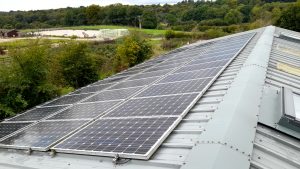
Solar panels on buildings generate power with zero carbon emissions like these on the roof of the CIEEM office. Photocredit: James Cleary.
CIEEM is delivering on its declaration of a climate emergency and biodiversity crisis. Our Action 2030 project will see us reach net zero carbon emissions by 2030 and lead the way for our professions in taking urgent action to address the inter-related climate and biodiversity crises. The need for climate and nature literacy for CIEEM members has been campaigned for by the Action 2030 Working Group that provides challenge and advice to CIEEM on the climate emergency and biodiversity crisis.
To ensure that CIEEM can call itself a carbon literate organisation, our Secretariat has been taking the Carbon Literacy Trust’s training course on carbon literacy. The course takes around 3-4 hours and is entirely online. It is broken down into 12 sections that members of staff can complete separately, allowing them to break up the learning in a way that suits them best. This course can also be used to count towards our CPD and annual reviews, as well as being logged as work hours. This process was started in early 2024, and we’re making sure that the new staff in our growing team undergo the training too. This process of becoming a carbon literate organisation has been incredibly useful. It has given our team, regardless of background or training, the ability to understand the climate crisis, what drives it, and crucially, what we in CIEEM can do to tackle it.
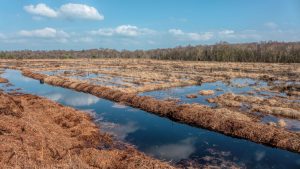
Restoring raised bogs like Fenns, Whixall & Bettisfield Mosses NNR and other peatlands is critical for carbon capture from the atmosphere and for restoring biodiversity. Photocredit: Stephen Barlow.
Following campaigning by our Action 2030 Working Group and our staff becoming carbon literate, we are currently undertaking a programme to develop our very own carbon literacy training course for CIEEM members. We are aiming for the content of the course to be fully accredited by the Carbon Literacy Trust by the end of 2025. We will build on their core components while incorporating customised, bespoke elements relevant to our sector. The course will aim to embed the importance of carbon and climate change into the wider ecological and environmental work of our membership. The climate emergency and biodiversity crisis are inextricably linked, and many of our members are on the forefront of creating ecosystems which capture carbon and address climate change. This is an excellent opportunity for CIEEM to lead the way in our profession, and deliver on our declaration to address the climate emergency and biodiversity crisis,
Ask yourself. How carbon literate am I? What do I do next?
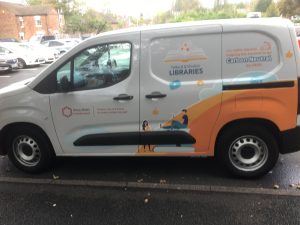
Electric vehicles generate zero carbon emissions and can be used to promote carbon awareness. Photocredit: John Box
Information about the authors
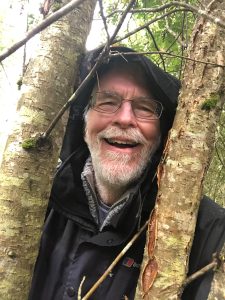
John Box is a CIEEM Fellow and a past President. John chairs the Action 2030 working group which provides challenge and advice to CIEEM on the climate emergency and biodiversity crisis.
Contact John at john.box@knowlebox.co.uk

Douglas Lewns joined CIEEM as a Policy Officer in 2022 after working in an ecological consultancy and dabbling in the world of academia. When not working, he enjoys searching for wildlife and finding new places to eat. He has a BSc in Environmental Geography and a MSc in Global Ecology and Conservation.
Contact Douglas at douglaslewns@cieem.net