

CIEEM welcomes a new Fellow: Tamsin Morris CEcol CEnv FCIEEM
Fellowship of the Chartered Institute of Ecology and Environmental Management (CIEEM) is the highest level of professional recognition awarded to individuals who have made a significant contribution to ecological and environmental management. It recognises leadership, knowledge, skills and experience, while also highlighting those who inspire and support others across the profession.
It is our pleasure to recognise Tamsin Morris CEcol CEnv FCIEEM as a CIEEM Fellow, in acknowledgement of her lasting contribution to ecological and environmental management in Scotland and beyond. Through her work on agri-environment schemes, peatland restoration and the Peatland Code, river and wetland projects, and applied research, Tamsin has helped to strengthen professional practice, improve environmental policy and guidance, and deliver better outcomes for nature, land managers and local communities.
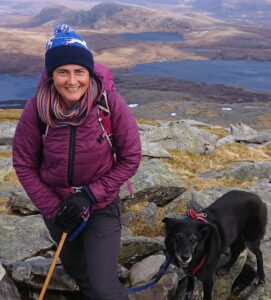
Tamsin Morris CEcol CEnv FCIEEM
Tamsin Morris is a freelance consultant with 30 years of experience in the environmental sector in Scotland. She started her career in organic agriculture in the late 90s, followed by a period project managing a European Commission funded project to restore and enhance the river Ythan and some time working for SEPA. Tamsin then joined her business partner in establishing an Aberdeenshire based environmental consultancy called Walking-the-Talk in 2008. Since then, Walking-the-Talk has delivered a wide range of ecological projects in the public, private and charity sectors in Scotland.
Tamsin was awarded Fellowship based on having made a notable and lasting contribution to the profession in the following areas:
Legislation, policy or good practice:
Tamsin’s work on two specific subject areas demonstrates a notable contribution with lasting impact:
- Implementing the Scottish agri-environment scheme and providing feedback to NatureScot and the Scottish Government to improve effectiveness for nature and small-scale land managers such as crofters on remote islands.
- Examining the quality and delivery of peatland projects and validity of claimed carbon credits, and subsequent feedback to IUCN to develop, refine and implement improved validation/verification protocols for the Peatland Code.
Much of Tamsin’s other work has been with river/ wetland orientated projects undertaken throughout Scotland, especially in the Aberdeen area. Additionally, Tamsin has worked for two validation bodies of the Peatland Code to independently validate the quality and delivery of over 70 peatland projects across the UK, which aim to claim carbon credits for their restoration work. Extensive feedback has been supplied to IUCN on how the Peatland Code can be updated and modified to ensure projects are accurately reported and deliver maximum benefit. Many of these modifications have subsequently been incorporated into the scheme.
Professional Standards:
Tamsin has made a lasting contribution to improving the effectiveness of the Peatland Code by challenging the quality of applications, and requiring more evidence of claimed carbon savings which can be verified using satellite and drone imagery. Her work on producing and reviewing agri-environment and land management plans, particularly on small and marginal landholdings in Scotland, has helped to raise standards and awareness of win:win opportunities (social and environmental); whilst ensuring greater consultation and engagement with land managers and local communities clearly leads to improved long-term solutions. Tamsin’s detailed feedback has helped IUCN to continue to revise their assessment guidelines to address these issues, demonstrating that she has had a lasting and effective impact on the way the Peatland Code should be applied.
Research:
Tamsin’s research has clearly influenced professional practice in ecology and environmental management, making a notable and lasting contribution. Whilst some of this work is ongoing, Tamsin clearly commands professional respect as her opinion is sought by statutory bodies. Practical research work has been undertaken in several areas of Scotland, including a project to understand the impact of recreational pressures on the islands within Loch Lomond. This led to changes in the way the National Park Authority manages public pressure in this area. Work has also been done regarding peatland restoration, undertaking feasibility studies for NatureScot on several upland estates between 2019-2023. Based on this work 6 estates have implemented peatland restoration activities, including changing their stocking levels, deer management and heather burning practices. Further work has been done for NatureScot, including assessing the impact of greylag geese on late cut silage in the Western Isles and an evaluation of Chough roosting sites on Islay.
Tamsin Morris has made a lasting impact on practical application of environmental policy, especially in Scotland, in areas including river restoration, peatland restoration and various agri-environmental initiatives. Her ability has been recognised by NatureScot, Scottish Government and other public bodies. Tamsin has the confidence needed to challenge inadequate current practice in a constructive manner, seeking changes to improve ecological and environmental (and social) outcomes.
I’m really pleased to have been made a Fellow of CIEEM. I think the young, naive ecology graduate starting out many years ago would have been delighted to learn of this eventual outcome. There’s no doubt that the ecology profession has, and will probably always face challenges, so the importance of a professional membership body like CIEEM can’t be underestimated. I hope that as a Fellow I can continue to provide support to our community of ecologists over the coming years.
Tamsin Morris CEcol CEnv FCIEEM
Overall
Tamsin is recognised as being highly competent in her field and has provided a very high standard of notable ecological capability and lasting achievement in a number of key areas, within Scotland and beyond. Tamsin will make an excellent addition to CIEEM Fellowship.
CIEEM is currently on the road to reaching 100 Fellows by the end of 2026, a milestone that reflects the strength, diversity and expertise within the profession. If you have made a notable and lasting contribution to addressing ecological or environmental management challenges, or if you know someone that has, why not explore CIEEM Fellowship?
Becoming a Fellow is a powerful way to demonstrate your knowledge, skills and experience, while contributing to the continued development of the profession. Fellows play a vital role as leaders, mentors and advocates, helping to inspire and support others through their work and influence.
If Tamsin’s journey resonates with your own career, now may be the time to consider putting yourself forward.