

CIEEM welcomes a new Fellow: James Shipman CEcol FCIEEM
Fellowship of the Chartered Institute of Ecology and Environmental Management (CIEEM) is the highest level of professional recognition awarded to individuals who have made a significant contribution to ecological and environmental management. It recognises leadership, knowledge, skills and experience, while also highlighting those who inspire and support others across the profession.
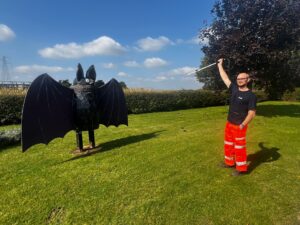
James Shipman CEcol FCIEEM
James Shipman CEcol FCIEEM is currently a Principal Ecologist at Jacobs UK Ltd and has amassed almost 20 years of experience in the Landscaping and Construction sector. James became a Chartered Ecologist in 2025.
James was awarded Fellowship based on having made a notable and lasting contribution to the profession in the following areas:
Professional Standards
James has made a notable and lasting contribution to raising professional standards through his commitment over many years to training those involved with bats and to publishing books that complement this process. In 2016, he received the Bat Conservation Trust’s Pete Guest Award for Outstanding Contribution to Bat Conservation and in 2021, he was inducted into the Bat Conservation Trust Hall of Fame with the recognition specifically highlighting his contribution through training. In 2025, his book Identifying Bats of Britain and Ireland: A Field Worker’s Guide was published by Pelagic Publishing. This book was designed to make bat identification more accessible and to help people become competent in working with bats. In 2027, Pelagic Publishing will publish his co-authored book The Hazel Dormouse: A Fieldworker’s Guide, the first dedicated entry-level field guide to surveying, identifying and handling of hazel dormouse.
Legislation, policy or good practice
James has made a notable and lasting contribution to legislation, policy and good practice, helping to review and strengthen the approach to bat protection in Gibraltar and the implementation of European bat legislation. He identified the importance of ensuring that Gibraltar’s developing environmental policy properly recognised the legal and conservation requirements relating to bats and the relevance of European bat protection legislation. He helped establish a bat class licensing system in Gibraltar, using the Natural England licensing model as an important benchmark. Establishing such a system represented an important step in translating established UK good practice into a Gibraltar-specific framework. One notable and lasting contribution is James’ bat surveys from 2014 to 2016 of the Gorham’s Cave Complex in Gibraltar. His survey work helped to build the understanding of the ecological values associated with the cave complex and contributed to the designation of the cave complex as a UNESCO World Heritage Site in 2016.
Research
James has made a notable and lasting contribution to research involving bats, and the recent publication of Identifying Bats of Britain and Ireland: A Field Worker’s Guide brings together many years of his research on bat identification as a practical resource for professionals working with bats. James has also contributed extensively to the long-term research of Professor Fiona Mathews (University of Sussex) across southern England through the provision of field data and ecological observations, particularly relating to greater horseshoe bats, that supports research into bat movements, habitat use and landscape connectivity. If research can be defined as a careful, systematic study to discover new facts, gather information or reach a deeper understanding, then James’ contribution is significant. James has undertaken many hours of observations of different species of bats and their behaviour. This is reflected in numerous publications enthusing and informing anyone interested in bats. This research both advances ecological knowledge and assists future bat workers with its practical application. All of this is essential to the future conservation of bats in UK and Europe, and will therefore provide the foundation for future findings and innovation.
Overall
Integral to the award of Fellowship is James’ work to review and strengthen the approach to bat protection in Gibraltar and the implementation of European bat legislation. The outcome was changes in policy and legislative implementation which have been incorporated into ongoing development and environmental decision-making in Gibraltar. James’ interactions with colleagues are “characterised by transparency, reliability and respect. He is always careful to provide accurate, evidence-based guidance, and he models the kind of professional conduct that strengthens trust within the sector and aligns closely with the standards upheld by CIEEM. His reputation for integrity means that people feel confident seeking his advice, knowing he will respond thoughtfully and with due consideration for both ecological and ethical responsibilities.”. James’ emphasis on accurate identification, ethical bat handling, scientific rigour, and continuous professional development all indicate a high level of professional integrity.
In the opinion of the review panel, James Shipman is fully worthy of becoming a Fellow of our Institute.
I am absolutely honoured and privileged to be awarded fellowship status with such a wonderful body that is CIEEM, I hope to continue in inspiring future ecologists and aiding research for many years to come!
James Shipman CEcol FCIEEM
CIEEM is currently on the road to reaching 100 Fellows by the end of 2026, a milestone that reflects the strength, diversity and expertise within the profession. If you have made a notable and lasting contribution to addressing ecological or environmental management challenges, or if you know someone that has, why not explore CIEEM Fellowship?
Becoming a Fellow is a powerful way to demonstrate your knowledge, skills and experience, while contributing to the continued development of the profession. Fellows play a vital role as leaders, mentors and advocates, helping to inspire and support others through their work and influence.
If James’ journey resonates with your own career, now may be the time to consider putting yourself forward.