CIEEM gives evidence to Environmental Audit Committee on revised Environmental Improvement Plan
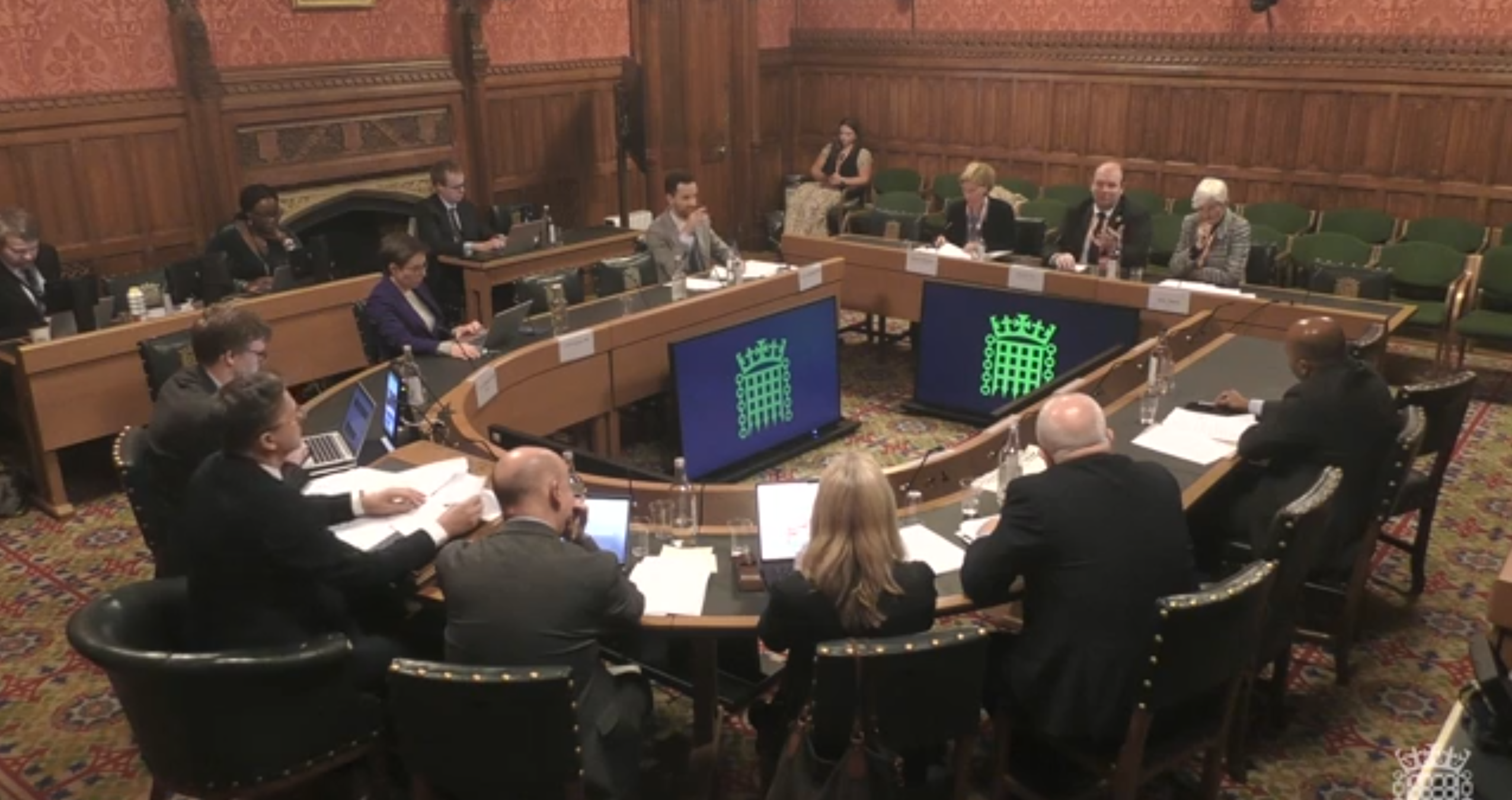
CIEEM gave oral evidence this week to the House of Commons Environmental Audit Committee as part of its inquiry into whether the Government’s revised Environmental Improvement Plan (EIP25) will deliver for nature.
The session, held on Wednesday 21 January 2026, explored the Government’s latest plan for meeting its legally binding environmental and nature targets under the Environment Act. Environmental Improvement Plans are required to set out how the Government will improve the environment over a minimum 15-year period. The most recent revision to the EIP, published in December 2025, follows earlier versions released in 2018 (25YEP) and 2023 (EIP23).
CIEEM Chief Executive, Sally Hayns, appeared before the Committee alongside representatives from the Nature Friendly Farming Network and the National Farmers Union. Earlier in the session, MPs heard evidence from Wildlife and Countryside Link, Green Alliance and the Healthy Air Coalition.
In their evidence, witnesses acknowledged that there has been some progress in the latest iteration of the plan compared to the 2023 version, including improvements to its overall structure. However, they collectively raised concerns about whether the EIP25 demonstrates the level of urgency and ambition required to address the scale of the nature and climate crises.
A key issue highlighted was the continued over-reliance on Defra to deliver the ambitions of the EIP25. While environmental leadership is essential, Defra alone does not have the levers, resources or cross-government authority needed to achieve the plan’s objectives. This concern is reinforced by a recent National Audit Office report, which concluded that Defra does not currently have sufficient capacity to deliver its own regulatory duties.
The evidence also focused on the critical role of farming in nature recovery. While agriculture must play a major part in delivering environmental outcomes, CIEEM stressed that farmers need to be properly supported to do so. This must however also include improved monitoring and enforcement of farming support schemes, as well as a strong network of farm advisers who understand both ecology and farm business, enabling them to work effectively with farmers on the ground.
CIEEM raised concerns about damaging political narratives that portray nature as a barrier to growth. Such rhetoric, including comments made at the time of the EIP25’s launch, risks undermining delivery. Nature recovery supports jobs, economic growth, food production, public health, flood alleviation, cleaner air and reduced pollution, and should be recognised as an enabler rather than a burden.
The Committee also heard that delivery of the EIP25 is being hindered by the absence of several key strategies, including the Land Use Framework, Food Strategy, Farming Roadmap, revised Environmental Land Management schemes and the full roll-out of Local Nature Recovery Strategies.
Adequate resourcing remains a major concern. While some funding has been allocated, it is insufficient to meet the scale of ambition set out in the plan, particularly for nature recovery. CIEEM highlighted the need for greater Government support to help develop the emerging private finance market for nature.
Investment is also needed in skills, training and capacity across the sector, alongside robust baseline data to track progress.
Finally, CIEEM emphasised that while restoration and recovery are vital, protecting existing habitats and species must remain a priority to avoid further losses while recovery efforts are underway.