CIEEM at the Labour Party Conference – by Jason Reeves
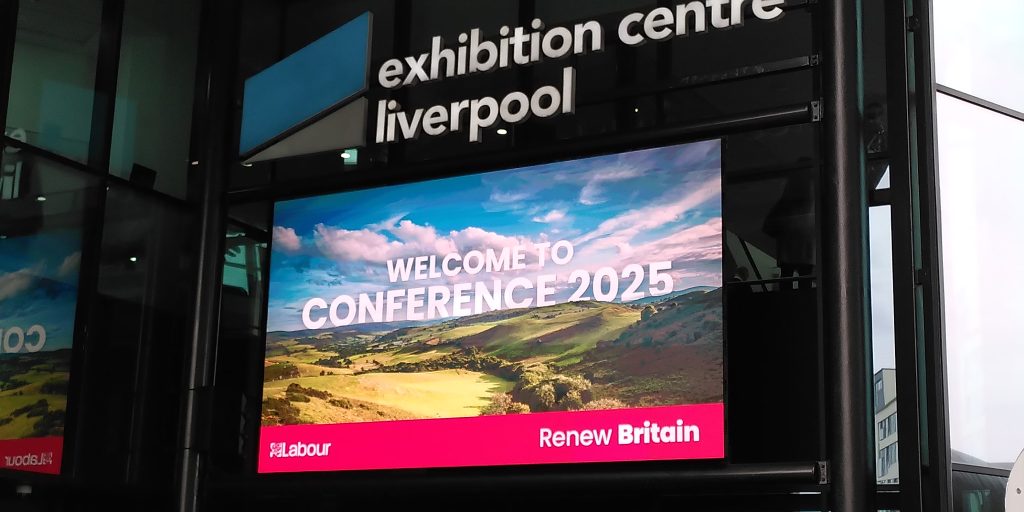
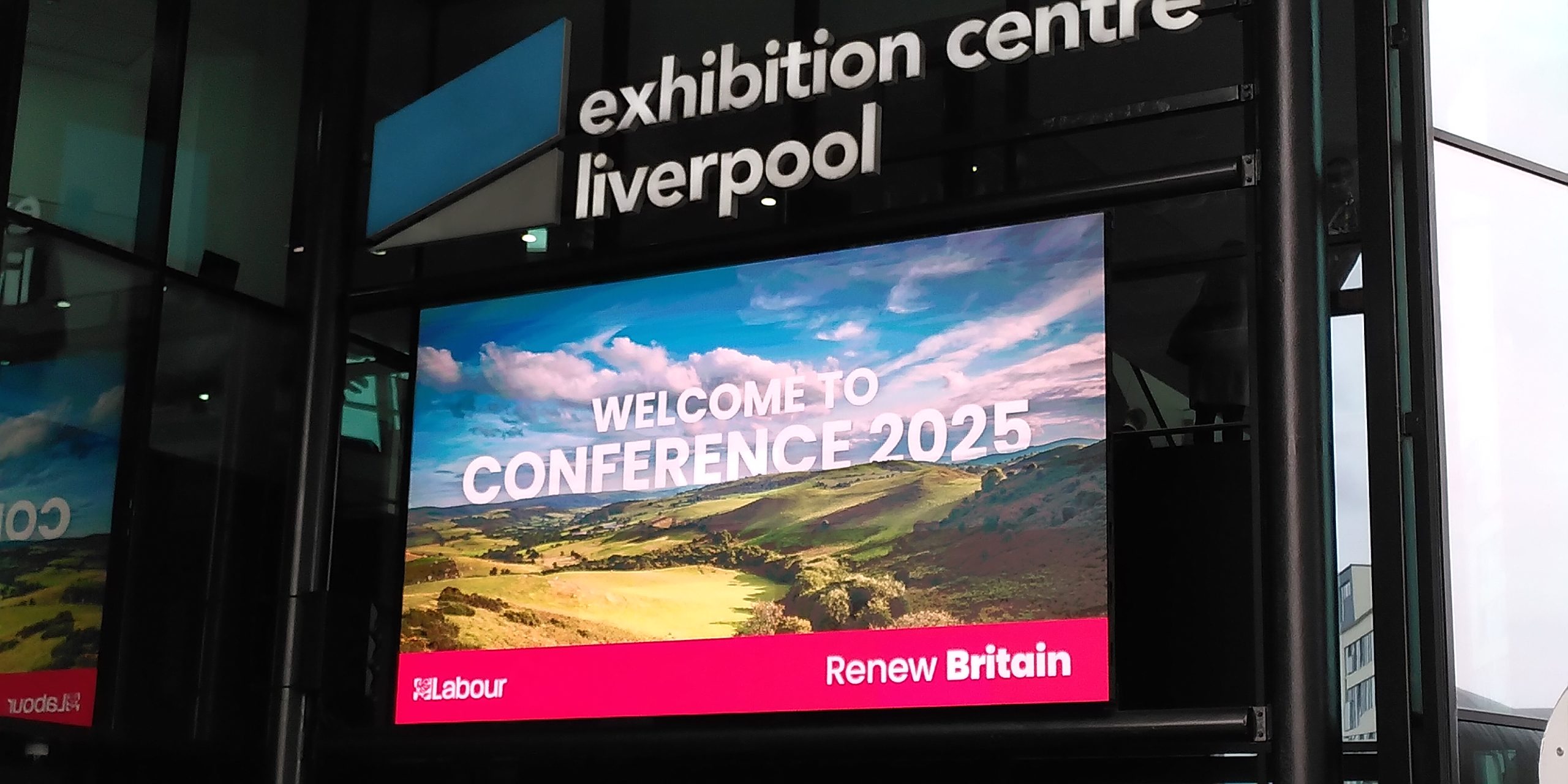
This was the first time that CIEEM has attended any political party’s conference and was indeed an eye-opening experience. I did have to do a double take on arriving at the Labour Party conference as the first two people that I recognised there were Zack Polanski (new Leader of the Green Party) and Michael Gove (ex-Conservative Cabinet Minister, but more understandably now Editor of The Spectator).
And unfortunately, I caught COVID sometime during the week of the conference, hence the delay in getting this blog out.
CIEEM-sponsored event
Along with this it was the first time that CIEEM has attended a party conference, it was the first time that we have hosted an event at a party conference. You can read more about this event in our news item.
Environmental presence
It was pleasing to see not one but two environmental hubs at the conference, both fringe hubs but within the secure area so very much part of the main event. These two hubs were run by the Labour Climate and Environment Forum (LCEF) and by Labour’s Environment Campaign – SERA.
Overall there were many events that were great at raising the profile of environmental issues, including on food systems, animal welfare, the green transition, clean energy, land use, climate change, water, nature finance, environmental messaging, the circular economy, and resource management.
I was however disappointed to attend an event on “green skills” that focused almost entirely on energy, with not one mention of nature. And in another event on Carbon Capture, Usage and Storage (CCUS), despite some differing views on the panel on how CCUS should be delivered, there was not one mention of the potential for natural habitats to sequester carbon. There is clearly still plenty to do on building ecological literacy.
Housing and development events
Despite the plethora of environmental events on offer, I attended a number of events on housing and development to see if there were any insights to be had on the Planning and Infrastructure Bill (PIB).
I sat through an entire event on how Labour are going to build 1.5 million homes during this parliament. The subject quickly turned to barriers to building houses – there was inflation, poor demand, poor purchasing power by first time homebuyers, the cost of materials, the cost of labour, the lack of skills in the construction sector, risk averse government agencies, and a few mentions of regulation. There was not one mention of bats, newts, spiders, birds or any other nature as a barrier to housebuilding. When asked about the solutions that the Government should look into, the developers on the panel said: lowering interest rates, reducing the cost of borrowing, clarifying planning regulation (but also that “radical reform worries me” because rapid change drives up costs), investing in materials such as local brick-makers so that the sector isn’t dependent on imports, and infrastructure connections. Again, no mention of nature protections needing to be swept aside as suggested by Government and as proposed in the PIB.
At another event, hosted by the Labour Housing Group, I listened to Housing Minister Matthew Pennycook say, quite genuinely I believe, why the UK needs to sort out its housing supply. He talked about the number of children in temporary accommodation and the number of families on housing waiting lists. But sadly when asked about whether the Government would reconsider Part 3 of the PIB he doubled down on the Government’s position that it will be a win-win for nature and misleadingly said that the Office for Environmental Protection (OEP) has said that the new Government amendments mean that the PIB will be good for nature. It is true that the OEP has said that the amendments improve the PIB, but also that they still consider the PIB to be a regression of environmental protections. Minister Pennycook went on to reference the infamous “£100m bat tunnel” as a reason for nature adding expense and delay – we have more information to share on this in due course [hint: it wasn’t the bats].
In the final development event that I attended I was pleased to hear developers and politicians alike saying that they wanted well resourced local planning authorities, and one developer that now incorporates swift bricks, bat bricks and hedgehog highways into all of its developments. This latter point is great, but what are those swifts, bats and hedgehogs going to eat? When asked about what is holding up housebuilding, the panel listed: land supply, financial viability of projects, and affordability for buyers. Again no mention of nature as a blocker. This session also included an MP saying that there should a statutory time period for statutory consultees to respond to planning applications and after which if there is no response the application should be automatically approved – but without adding anything about properly resourcing those statutory consultees to be able to do their jobs in a timely manner.
Build Baby Build
I was also disappointed in Steve Reed’s campaign with his “Build Baby Build” caps that have clearly been inspired by Donald Trump’s “Drill Baby Drill” slogan and his MAGA caps. I felt this was in poor taste given the Trump administration’s assault on science, nature, the environment and climate change.
A note on Reform
I was amazed at how much conversations regarding Reform percolated into every single session and event that I attended. It is clear that the Labour Party has one eye on what Reform is doing in conjunction with everything else that they are trying to achieve.
Overall experience
The Labour Conference was good for meeting others with similar ambitions to raise the profile of nature conservation, many not from the environment sector. It certainly could however have done with more input on ecology and nature conservation. I am sure we will be back.
 Jason Reeves CEnv MCIEEM is CIEEM’s Head of Policy. He has been involved in policy and advocacy for the profession for 20 years.