Member Networks – September 2026
Scotland Geographic Section
River Calder field visit short write-up for In Practice
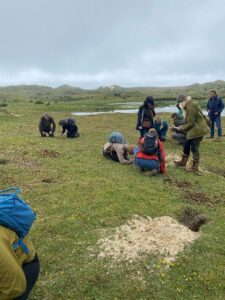
On a rather wet soggy May day which felt more like Autumn, an intrepid group of CIEEM members and supporters set off from Newtonmore to see how nature-based solutions are transforming the River Calder and strengthening the resilience of the wider River Spey catchment. The River Calder is a large tributary in the Upper Spey in the Cairngorms.
Ewan Harris MRICS, Director, Head of Estate Management Scotland at Savills and the Factor on the Estate and Ffion Robb, Spey Tributaries Project Officer led this field visit, and we were very fortunate to be joined by current and past staff from the Spey Catchment Initiative and Savills who shared great insights. Ewan and Ffion presented at the 2025 CIEEM Scotland Source to Sea Conference so it was great to see this site in-person.
Against the dramatic backdrop of Glenbanchor, we saw extensive tree regeneration along the stream banks, aided by fencing and adaptive deer management. As well as creating valuable habitat, these trees will, over time, provide shade and help reduce the effects of rising temperatures on declining juvenile salmon and trout populations and the species that depend on them. Research by the Spey Fishery Board found that summer temperatures had reached a critical 27–28°C, placing significant stress on young fish.
We also saw the strategic placement of large woody structures and the resultant formation of gravel banks and varied river and channel morphology. Amazing to think how such simple and relatively cheap measures can contribute to flood attenuation, making such striking impacts in a short period of time.
There is baseline data and ongoing monitoring covering everything from electrofishing, redd counts, water temperature, freshwater invertebrates, bird surveys and more which will all help build up a picture of how the restoration methods deployed has changed a whole range of measures, and the lessons to be learned for future management here and at other sites in the Highlands.
The project really demonstrates how strategic partnerships between landowners (Pitmain & Glenbanchor Estates), environmental organisations and rural businesses can deliver meaningful, landscape-scale change. In their words ‘the time to stop thinking and start doing is now’ and this was perfectly demonstrated by the actions taken.
You can find out about the history of the project with this great video from 2020.
South West England Geographic Section
CIEEM SW Member Network Event: Penhale Dunes, Cornwall, 12th June 2026
In June, we enjoyed a visit to Penhale Dunes, one of the largest sand dune systems in Cornwall, to understand a little more about grazing management and have an opportunity to look for some of the special plant species present in this SAC and SSSI.
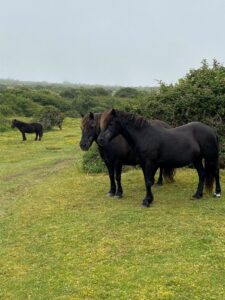
Jon Cripps, Penhale Dunes Ranger for Cornwall Wildlife Trust, led us to parts of the Dunes not accessible to the general public, to see the ponies, goats and cattle that graze different areas of the dunes. We got to study some of the plant life, including shore dock, early gentian and scrambled egg lichen, and were also treated to some chough sightings!