
What AI Could Mean for Environmental Practice
Written in anticipation of CIEEM’s 2026 Scotland Conference, Fieldwork Futures: Innovations in Ecological Practice, where John Hynes will be presenting on behalf of MKO.
By John Hynes, Ecology Director, MKO
Most of us chose this profession because we care about the natural environment. We wanted to be out in the field, gathering evidence, solving problems, contributing to meaningful outcomes for the environment and society. And yet, a significant part of a modern environmental practitioner’s working life is spent on tasks that don’t require their expertise at all: Data entry, administration, pulling text from spreadsheets into word templates, and formatting reports.
That’s where I believe AI has the most to offer our profession. Not by replacing environmental professionals, but by taking on the work that doesn’t need an expert, so that experts can spend more time on the work that does. But this isn’t a simple story. AI also brings real risks that we need to confront honestly, from the reliability of its outputs to the environmental cost of the technology itself. If we’re going to adopt AI, we need to do so with our eyes open.
From paper to digital to AI
Think about how field data collection has evolved. Not long ago, and in some cases still today, many of us were recording survey data on paper. Handwritten notes, transcribed back in the office, then entered into a spreadsheet or report. The move to digital field recording, using GIS-enabled devices with structured forms and dropdown fields backed up to the cloud, was transformative. At MKO, that transition for our ornithology team alone saved in the region of two administrative desk-based data management days per month, per person.
Now, imagine the next step. Instead of manually selecting dropdowns or typing entries in the field, an ecologist speaks to an AI assistant trained on the specific survey methodology. The AI knows which fields need to be completed. It prompts for details that might otherwise be missed.
Take a vantage point survey as an example. An ornithologist records a raptor in flight. The AI prompts: was that a commuting flight or a hunting flight? Was the bird carrying prey? These are details that matter, that improve the quality and consistency of the data, but that can easily be overlooked when you’re cold, wet, and watching multiple species across a wide survey area.
This isn’t hypothetical. At MKO, we’ve built and deployed AI-assisted field data collection tools for our environmental survey teams. It works, and the potential to extend this across other survey disciplines, including ornithology, habitat assessment, and protected species surveys, is significant.
The time savings from field to report are real. But what excites me more is the improvement in data quality. Better data leads to better assessment, better professional judgement, and ultimately better outcomes for the projects and the biodiversity we’re trying to protect.
How roles will evolve across the profession
AI will change how all of us work.
For early career practitioners, AI should not replace learning. It should accelerate it. It has the potential to allow them to spend less time processing data and more time developing professional judgement, interpreting evidence, and understanding project context.
For experienced practitioners, AI can help create time. It excels at reducing time spent on administration, freeing up capacity for deeper thinking, more considered decision-making, mentoring junior staff, contributing to policy development, and ultimately better environmental outcomes for the projects we help deliver.
For those leading teams and businesses, it requires us to rethink how work is structured, how people are trained, and how quality is assured. We need more people in this profession, AI doesn’t change that, but the roles they fill and the skills they need will look different. It’s our responsibility as professional leaders to make sure the next generation is ready for a profession that is already changing.
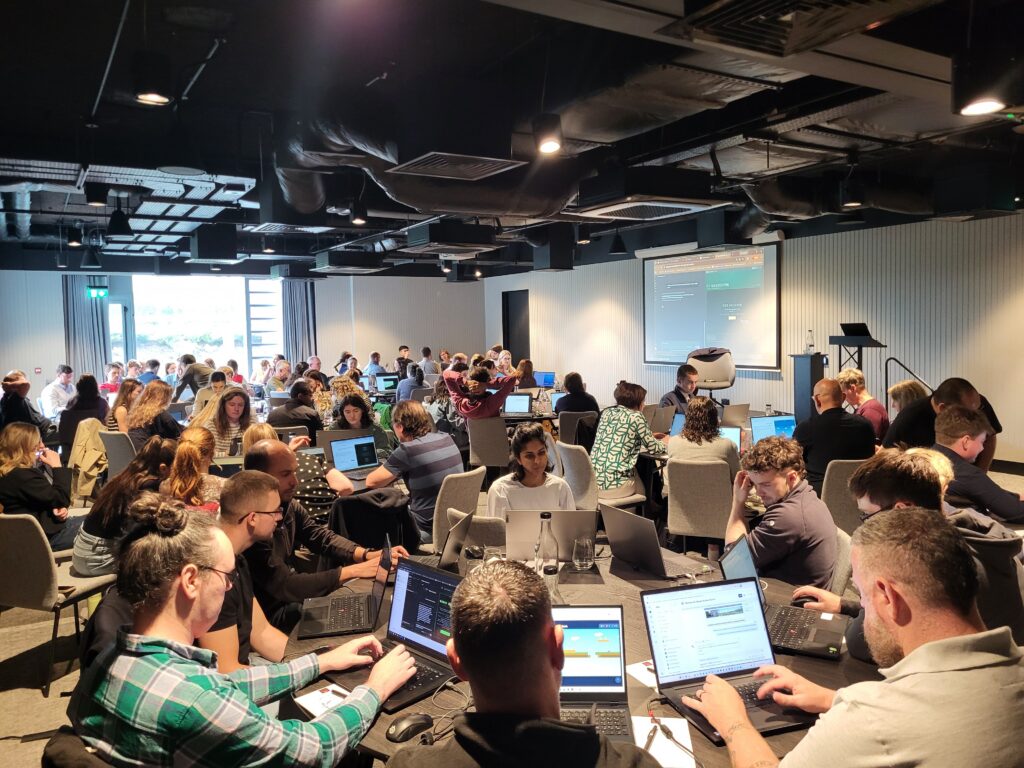
MKO Colleagues at an AI Training Day
Risks, responsibility and accountability
AI also brings risks that our profession needs to take seriously.
There is no shortcut to understanding a project: its location, its catchment, its environmental context. That takes time and attention. If we allow AI to erode the depth of professional engagement with a project, or the critical thinking that underpins good environmental practice, we lose more than we gain.
It can be tempting to accept AI-generated outputs at face value. However, AI models can hallucinate. They can generate confident, plausible outputs that are simply wrong, and without rigorous review, those errors can find their way into assessments and advice.
Ownership and accountability matter. “AI created this” cannot become a substitute for professional judgement. We need clear checkpoints, robust quality assurance, and a culture where people take responsibility for the work they produce and the advice they provide.
As environmental professionals, we also have to be honest about AI’s own environmental footprint. The energy and water demands of AI are significant. We should be conscious of how we use these tools: favouring renewable energy sources where possible, choosing models proportionate to the task, and learning to work with AI efficiently rather than wastefully. A well-crafted prompt that delivers the right result first time and that can be shared and reused is far better than an hour-long conversation repeated daily.
The choice in front of us
AI is being adopted across every profession, and ours is no exception. The question is not whether we engage with it, but whether we do so responsibly, with our eyes open to the risks as well as the opportunities.
Environmental practice has never stood still. We’ve embraced countless technologies and innovations over the past three decades from GIS to automated call analysis. We’ve adapted to ever changing standards and regulatory frameworks. AI is another step in that evolution.
The opportunity isn’t simply to work faster. It’s to spend less time on work that doesn’t require technical expertise and more time applying the judgement, critical thinking and experience that does. More time developing the next generation of professionals. More time for the work that drew us into this profession in the first place: protecting and restoring the natural environment.
Join the conversation
I’ll be exploring these themes and more at the CIEEM Scotland Conference in Glasgow on the 29th of September, where I’ll be delivering the opening keynote titled “Augmenting Expertise: Integrating AI into Expert-Led Environmental Practice.”
Whether you’re a student, early in your career, or a seasoned practitioner, this conversation matters to all of us. I’d love to see you there.
This blog was developed with the assistance of AI. I provided the ideas and professional context and shaped the content iteratively through conversation with AI. The decisions about what to include, what to leave out, and what felt right were mine. The expertise was human. The assistance was artificial.
About the Author
John Hynes is Ecology Director at MKO, Ireland’s largest dedicated environmental and planning consultancy. He leads a multidisciplinary ecology division of over 100 professionals and is currently driving MKO’s AI adoption programme across the business.