CIEEM Action 2030 Group donates to peatland restoration project
This blog is written on behalf of CIEEM’s Action 2030 working group, a project leading CIEEM’s vision to reach net zero carbon emissions by 2030 – find out more on our website. This information has been prepared in collaboration with Yorkshire Wildlife Trust.
Each year, the Action 2030 working group donates to a carbon compensation project from around the UK to offset a portion of CIEEM’s carbon emissions that we have not managed to prevent and to deliver tangible benefits for both climate and nature.
The project selection process is guided by a set of principles – additional, verifiable, removing CO2 from the atmosphere, permanent, undertaken in real time, based locally, avoiding negative impacts – and our choice of projects rotates around the four nations of the UK on a year-to-year basis. You can read more about these principles and the previously selected projects at the link at the top of this article.
For 2025, we returned to a project that we had previously donated to in 2021: the Yorkshire Peat Partnership, led by Yorkshire Wildlife Trust. Our original donation to the project was £200 and we are delighted to be able to return with a donation for 2025/26 of £8,469, an increase reflecting both the growth of CIEEM’s carbon compensation contributions and the expansion of Yorkshire Peat Partnership’s work on peatland restoration across Yorkshire.
Peatlands are vital to climate change mitigation efforts across the world, owing to their incredible carbon sequestration capabilities: for example, globally, peatlands are estimated to store twice as much carbon as the world’s forests.
10% of the UK’s land area is covered by peatlands, but over 80% of these areas are degraded, resulting in net carbon emissions, rather than sequestration. It is estimated that a loss of just an additional 5% of the UK’s functional peatlands would result in a net loss of carbon equivalent to the UK’s entire annual human-made greenhouse gas emissions.
The consequences of peatland degradation are not limited to carbon loss: these ecosystems also mitigate flood risk through water retention; are home to many iconic species that rely on unique peatlands, such as the Large Heath butterfly and wading birds like the Dunlin; and approximately 70% of the UK’s drinking water comes from peatland areas. Each of these benefits are critically undermined when peatlands are degraded.
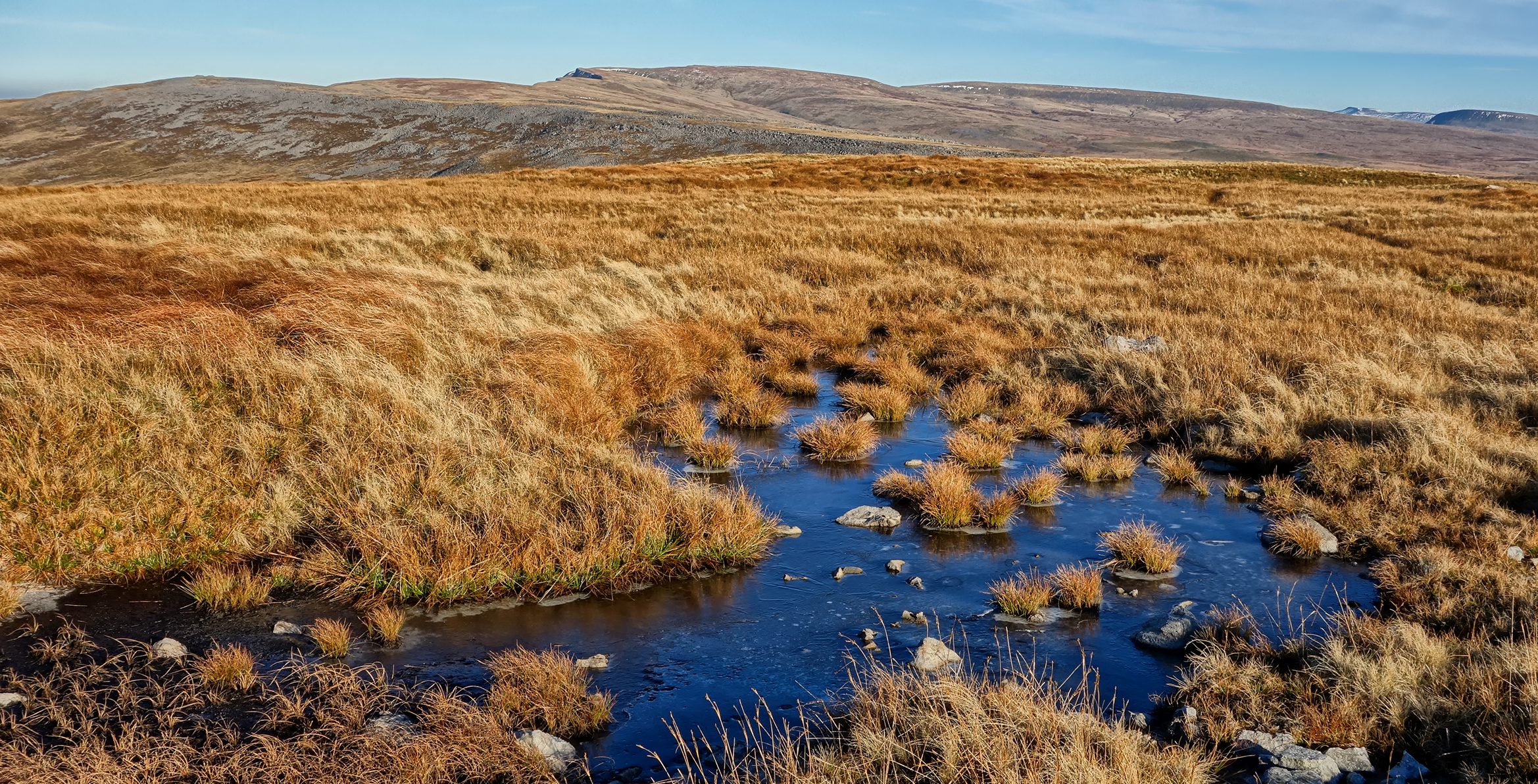
Our original donation went towards an area of peatland known as Fleet Moss, at the time one of the most degraded peatland sites in Yorkshire. Our donation contributed to the installation of traps and dams to re-wet the land by preventing water being lost through the pre-existing grips and gullies.
Fleet Moss is just one part of Yorkshire Wildlife Trust’s efforts to restore over 30,000ha of peatland across the county. Over a quarter of the UK’s upland blanket bog – a type of peatland – is found in Yorkshire. The county’s bogs alone are estimated to store over 27 million tonnes of carbon, as well as protecting many Yorkshire valley communities from flooding, and housing some of the country’s most iconic species, such as Curlew and Golden Plover.
Many more patches of peatland require urgent attention across Yorkshire. This year, our donation will support the Bridestones Moor Peatland Restoration Project, an area of degraded upland blanket bog in Todmorden. Once again, this project is being led by Yorkshire Peat Partnership, in collaboration with the landowner, Bridestones Rewilded CIC, a community-owned organisation.
This project aims to re-wet the peat, stabilise eroding surfaces, restore peat-forming vegetation, and improve long-term ecosystem resilience. In addition to delivering measurable climate mitigation benefits through carbon sequestration, the project will also reduce flood risk for local communities, aid in the recovery of nature in the area, and safeguard a nationally significant landscape. Delivery is planned over autumn and winter 2026–2027, with monitoring extending over the following decade to ensure long-term success.
Action 2030 are proud to support this project and to continue our collaboration with Yorkshire Peat Partnership and Yorkshire Wildlife Trust as they aim to restore peatlands across Yorkshire.