
CIEEM welcomes a new Fellow: Dr Rachel Hirst CEcol CEnv FCIEEM
Fellowship of the Chartered Institute of Ecology and Environmental Management (CIEEM) is the highest level of professional recognition awarded to individuals who have made a significant contribution to ecological and environmental management. It recognises leadership, knowledge, skills and experience, while also highlighting those who inspire and support others across the profession.
We are delighted to recognise Dr Rachel Hirst CEcol CEnv FCIEEM as a CIEEM Fellow in acknowledgment of her outstanding career and continued impact on the profession.
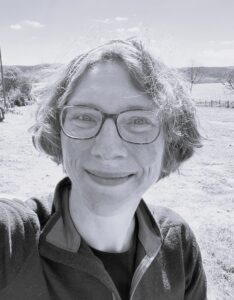
Dr. Rachel Hirst CEcol CEnv FCIEEM
Since 2012, Rachel Hirst has worked for Applied Ecology Ltd as a Director (Scotland). In this role, Rachel is responsible for day-to-day business management and delivery of work of all areas of the business’ Scottish operations including procurement of work, design and execution of fieldwork, data analysis, reporting quality management, client management, recruitment and pastoral care, and other quality, personnel and company policy work activities across two offices. Prior to this, Rachel was the Principal Ecologist and Head of Ecology for Land Use Consultants (LUC, 2005 – 2012), having previously held the role of Associate Ecologist (2003 – 2005) and Senior Ecologist (2001 – 2003).
Rachel’s work has been assessed as having made a significant contribution in the following areas:
Research which has practical application in the profession of ecology and environmental management.
Rachel’s research output when undertaking her PhD is impressive, as evidenced by the number of publications (6) in respected journals and conference proceedings from 1998-2005. This research has clear application to ecological practice and is both important and meaningful. Rachel is apparently the only person to have run randomised block experiments on the damaging impacts of military vehicles on grassland habitat. This work is described as ‘highly original’ and ‘pivotal’. This research-focus then continued to good effect in her significant and respected (consultancy) work relating to onshore wind farms, e.g. for SNH (as was).
Establishing or raising professional standards through developments in training, quality standards or methods.
Rachel’s work on bats and especially on impacts of wind farms (individually and cumulatively) is outstanding; she is a key go-to person for NatureScot and developers in the area, and indeed on wider ecological issues. Rachel has also contributed to formal guidance on bat survey methods and the development of the UKHab classification scheme.
Rachel has been a major contributor to the registration of Chartered Ecologists for over a decade. In addition, Rachel was the recipient of a Best Practice Award from RTPI for an exemplar wind farm Habitat Management Plan and went on to be a contributing panel member for the original SNH wind farm construction good practice guidance.
Promotion of ecological professionalism among employers, organisations, companies and other institutes.
Rachel’s work on the Cruachan 2 development was outstanding, and she has led significant work with ScottishPower Renewables regarding surveys of birds and bats. Rachel’s work on the ‘Flamingo Land’ development was high profile and essential and involved robust survey work and a EcIA which stood up to considerable scrutiny.
Rachel is a leader in supporting Women in Science. Her role within the iconic Newnham College (for women), University of Cambridge is important, and clearly greatly valued by the college governance. Rachel has also shown leadership in workplace inclusion and diversity within her current company. At the same time, through her external work with Newnham College and previously the BES, Rachel acts as a champion for promoting the profession among women.
Innovation through establishing new partnerships, leadership, techniques or awareness for ecological professionalism.
Rachel has built effective and enduring partnerships with local authorities within the Central Belt of Scotland, and various Glasgow schools. Other partnership work included a successful collaboration with Glasgow-based cellist, Jessica Kerr on the Creative Scotland funded ‘Stories of People and Trees’ (2024).
From the evidence provided, the review panel commented that:
We are delighted to see Rachel coming forward after 25 years of work as a practising ecologist. She is clearly held in very high esteem by colleagues and clients and will mark the next phase of her journey with CIEEM as someone who will continue to pass on her considerable expertise and experience to colleagues.
Rachel has special skills as a botanist, in undertaking ecological impact assessments and advising on restoration ecology and biodiversity policy. She was one of the first Chartered Ecologists in Scotland and is a role model for excellence in conduct.
It is clear that Rachel has, through her substantial professional experience, demonstrated the qualities one would expect and welcome in a new CIEEM Fellow. She brings to the role a valuable combination of scientific rigor, professional integrity, technical standard setting and thoughtful leadership.
It’s not a bad thing for later stage practitioners to step back and look objectively at what they have done and how far they have come. As someone who for the majority of her adult life has had bouts of profound imposter syndrome whilst also grappling with more than a sprinkling of ecogrief, my CIEEM Fellowship allowed me to acknowledge my own achievements for biodiversity, which in turn has given me a renewed sense of positivity and purpose in my own practice, and how I can help others shape theirs.
CIEEM is currently on the road to reaching 100 Fellows by the end of 2026, a milestone that reflects the strength, diversity and expertise within the profession. If you have made a significant contribution to addressing ecological or environmental management challenges, Fellowship could be for you.
Becoming a Fellow is a powerful way to demonstrate your knowledge, skills and experience, while contributing to the continued development of the profession. Fellows play a vital role as leaders, mentors and advocates, helping to inspire and support others through their work and influence.
If Rachel’s journey resonates with your own career, now may be the time to consider putting yourself forward.