
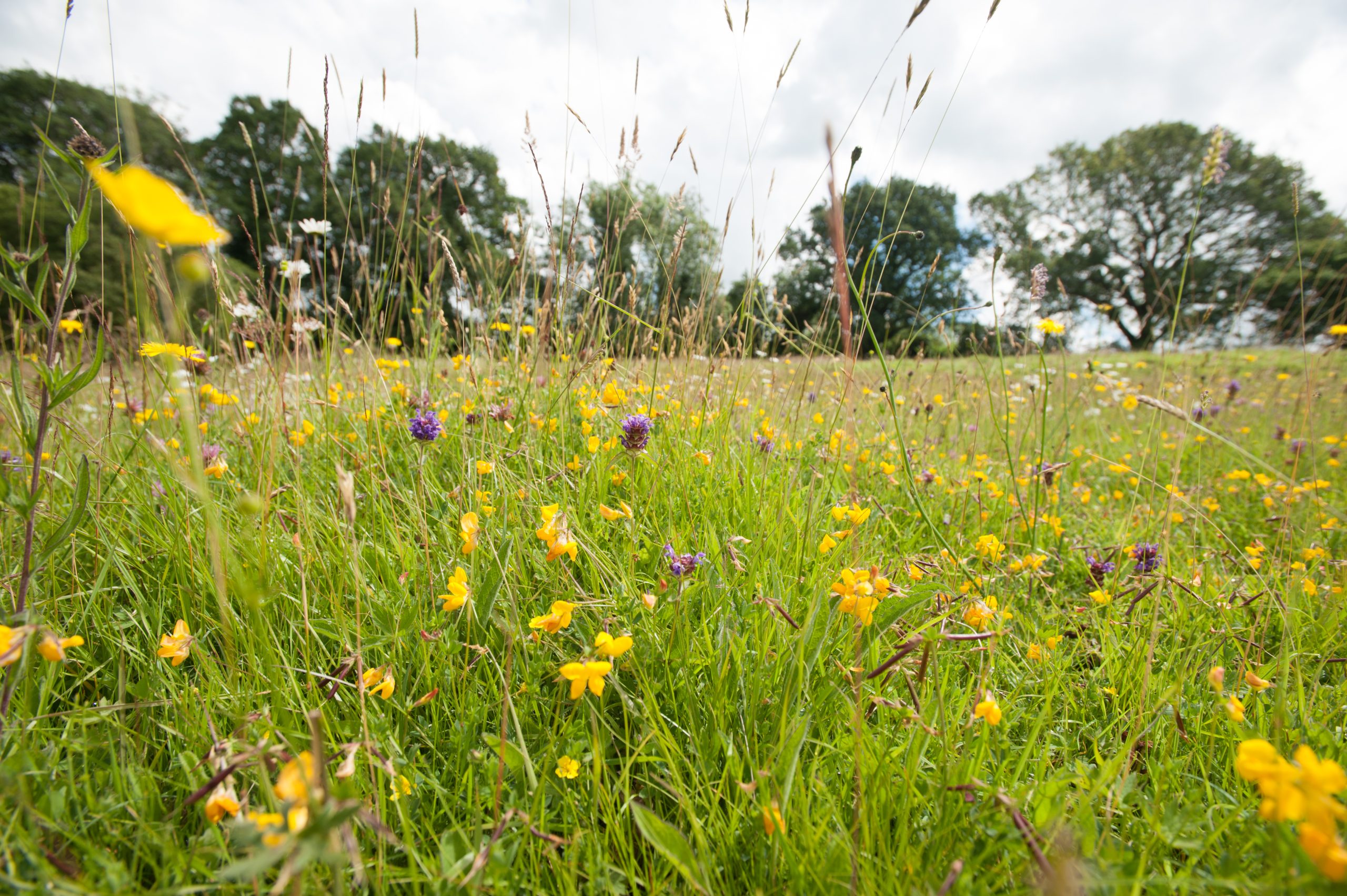
Do priority habitat grasslands need more recognition and protection in the planning system? – by Craig Llewellyn
Over the last century we have seen catastrophic loss of our priority habitat grasslands, with remaining remnants now highly fragmented across the landscape.
Priority habitat grasslands are sensitive habitats which are easily degraded and damaged via land use change, such as development (direct and indirect impacts), over and under grazing, application of fertiliser, and loss of traditional low-intensity management (such as haymaking).
This has led to a decline in both the function and condition of these important assets – not just for the incredible array of biodiversity they support, but the carbon stored in their soils, their role in producing nutritious food, and the delivery of other ecosystem services. Despite this degradation, often key attributes remain; many of these grasslands could be identified as irreplaceable, such as key component plant or fungi species, and unique environmental contexts, such as soil properties or hydrological function.
In addition to priority habitat status in the UK, many of our rarest and most unique grassland types receive additional recognition within the European Union’s legislation (Annex I Habitats Directive), indicating that they are habitats of international conservation concern. As one example, only 870ha of upland hay meadows are estimated to remain in England. Their importance on a global stage has not prevented their decline.
Despite these desperate circumstances, their recognition and protection in the planning system remain poorly represented. No priority grassland types are listed as examples of Irreplaceable Habitats within the National Planning Policy Framework (NPPF) – once again they are overlooked. Further, in spite of their rarity and high level of distinctiveness, they are not treated as irreplaceable within the Biodiversity Net Gain (BNG) statutory Metric, with all grassland types excluded from the secondary legislation which identifies specific habitats as being irreplaceable and therefore subject to bespoke measures within the BNG Metric.
See more on this in the Plantlife briefing: Our irreplaceable heritage – priority habitat grasslands
Therefore, Plantlife and CIEEM have acted to design a survey that captures the views of ecologists and environmental managers to understand whether, and how, the planning system in England is conferring sufficient protections to priority habitat grasslands, and whether there is a need for additional protections.
Your responses will help us gather evidence for the UK government to:
- Feed into the live consultation on the National Planning Policy Framework (NPPF) for England, which includes an updated definition of irreplaceable habitats and a list of example habitats.
- Help us make the case that priority habitat grasslands should be included in the exemption list of irreplaceable habitats within secondary legislation for Biodiversity Net Gain.
- Provide an overview of planning cases that impact priority habitat grasslands, the mitigation compensation measures applied, and the overall outcome.
- Feed into our engagement (alongside a briefing) with the Department for the Environment, Food, and Rural Affairs, and the Ministry of Housing, Communities, and Local Government to make the case for better recognition and protection of our priority habitat grasslands.
We hope that we can count on you to have your say as an industry and help us continue the fight for our precious grasslands at a time when it’s needed most.
Complete the survey: development on priority habitat grasslands
Acknowledgements
Jo Riggall from Plantlife for supporting the drafting of this blog.
Header image: Bird’s-foot Trefoil and Selfheal, Ryewater Farm, June 2012 © Martin Jones – Plantlife