Social benefits of off-site BNG provision: A holistic approach
It is increasingly recognised that off-site Biodiversity Net Gain (BNG) can provide greater benefits for biodiversity than on-site delivery. This is largely due to the potential for large-scale nature restoration, landscape connectivity, and the opportunity for more ambitious habitat delivery, including the restoration of high and very high distinctiveness habitats. Off-site habitat banks also tend to be less vulnerable to anthropogenic disturbance and are generally subject to more robust enforcement and accountability.
In contrast, on-site BNG is often limited in scale and relatively fragmented. These sites are also more susceptible to degradation from ongoing pressures, including uncontrolled levels of human activity, the presence of domestic pets, and pollution. However, it is often assumed that only on-site BNG can deliver significant social benefits, such as recreation opportunities and community engagement, whilst off-site BNG sites are perceived as being relatively inaccessible. This doesn’t have to be the case and shouldn’t always be.
 Recognising social impacts
While the primary purpose of BNG is restoring nature, public engagement is a critical part of nature recovery. When people feel connected to nature, they are more likely to value, protect and advocate for it. Off-site BNG projects can and should, in appropriate circumstances, be designed to consider the provision of social benefits alongside ecological ones, and the opportunities to do so are significant.
Yet there is no one agreed method for tracking or quantifying social impact, despite growing interest across the nature and climate sectors, and from within business, on the importance of its inclusion. The current development of British Standards Inclusion (BSI) Flex 705 on Community Engagement & Inclusion for natural capital projects will be an important step forward. Whether considering social engagement or social benefits, both are inherently local, like nature, with approaches and impacts shaped by place.
With one of Nattergal’s key values being to ‘Act Local’, and recognising a gap in collated, relevant guidance, in 2024 Nattergal commissioned ‘Stakeholder Engagement Best Practice for Landscape-scale Nature Recovery Projects’. The report establishes a framework for enhancing and embedding stakeholder engagement into nature restoration. Produced by experts in this field from the University of Oxford and the Countryside and Community Research Institute, the guidance uses Nattergal’s first site, Boothby Wildland, as a case study.
An exemplar: Boothby Wildland
 Stakeholder relationships at Boothby have been built through a ten-point engagement framework – a key part of the Best Practice Guidance. This includes stakeholder mapping, early dialogue, co-design of community benefits, and continuous feedback loops. Engagement is treated as an ongoing process, not a one-off activity, with an ‘open-door’ policy as well as more formal opportunities for feedback.
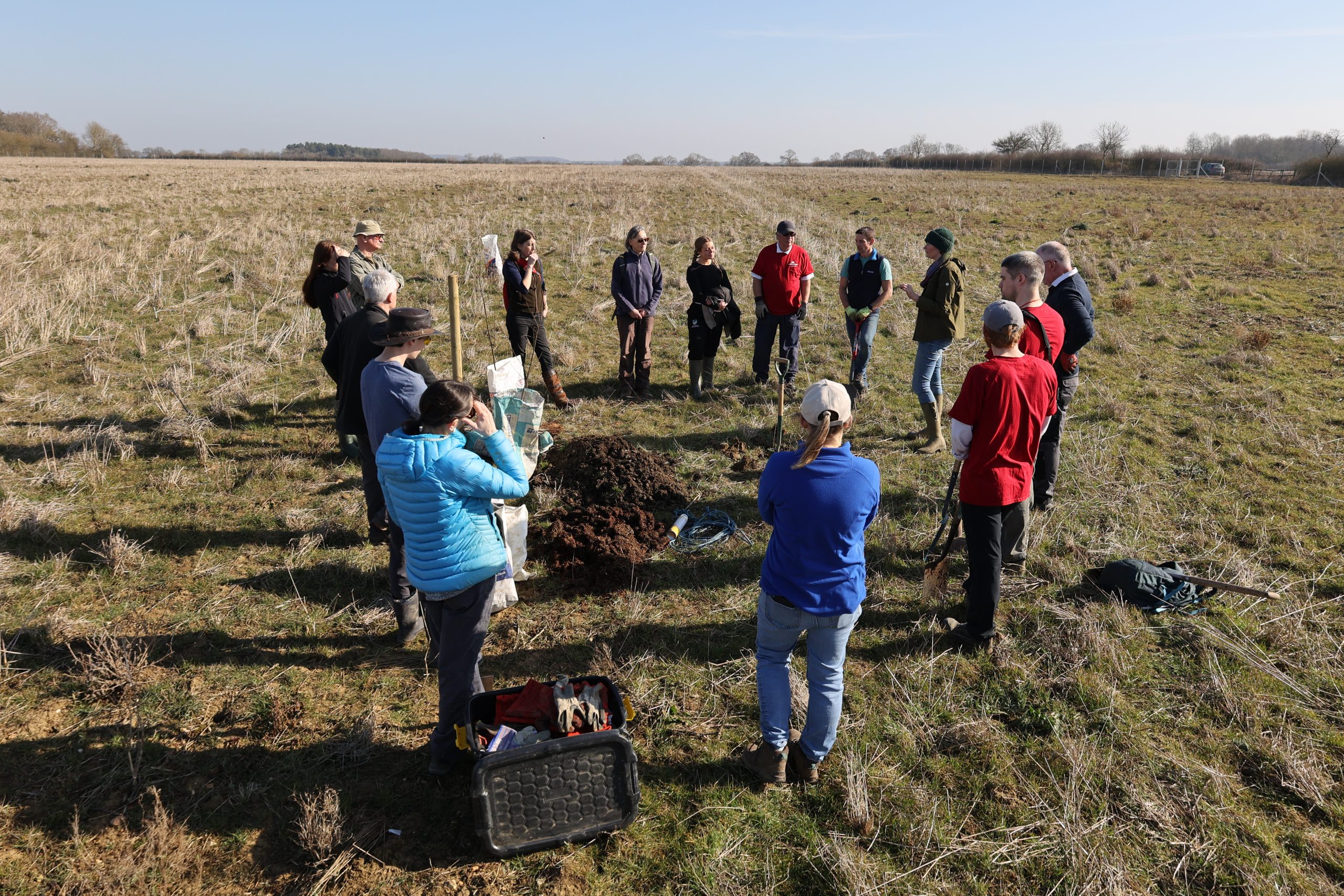
Capacity to focus on local engagement has been supported through Landscape Recovery, with Boothby being the first project in England to enter the Implementation Phase, a 30-year agreement with Defra and Natural England. This includes funding for a dedicated Communities and Volunteer Co-ordinator, who oversees much of the local engagement. Consultation, volunteering, guided walks, free family events and the establishment of a local community group have all helped foster trust and inclusion. Collaborative workshops have resulted in co-designed plans, for example on fencing and access, and has sparked ideas such as the creation of a community orchard.
The volunteering programme has been hugely popular, with over 1400 hours having been clocked up so far in 2025. Tasks vary from habitat management, such as tree guard removal and creating hibernacula, to data collection through water quality testing, fixed point photography and trail cameras, as well as supporting our annual family-friendly Nature Day. These activities improve mental and physical wellbeing, foster community pride, and strengthen nature connectedness. Our latest survey showed 100% of respondents would recommend volunteering at Boothby Wildland.
Collectively, these efforts have institutionalised engagement, embedding equity and accountability into Boothby’s long-term nature recovery strategy, and those of its parent company Nattergal. The Boothby model has inspired other nature recovery initiatives (including Nattergal’s High Fen and Harold’s Park Wildlands), and is seen as an industry exemplar (e.g. route map to community benefits from natural capital investment and as a Green Finance Institute case study).
Complementing Nature First
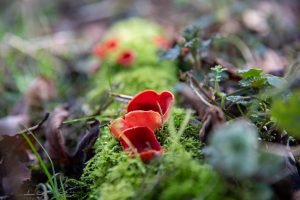 At Nattergal we have a ‘Nature First’ principle, which frames decision making in a wide breadth of scenarios. We have shown at our sites that social engagement can bring benefits to local people, whilst ensuring that the primary purpose of nature restoration is not compromised. Careful planning is required, leading with nature restoration plans for which we find the appropriate finance mechanism and then layering in complementary social benefits.
Volunteering is a good example of the multiple positive impacts flowing in both directions. Our aim is to promote stewardship and positive environmental behaviours both within our sites and beyond, and we recognise that both access and positive experiences in green and blue spaces help promote this. The vision is for our sites to become community hubs and exemplars in the wider local environment. Where appropriate, increased access can be granted through the establishment of additional permissive routes, for example. At Boothby there has been a 30% increase in paths across the Wildland. These additional footpaths and bridleways were carefully co-designed with local community input, creating loops and connect existing Rights of Way, sometimes formalising existing ‘desire lines’. This was done whilst ensuring these are not conflicting with the nature recovery mission.
Maximising off-site BNG benefits
Off-site BNG doesn’t have to be delivered apart from people. With thoughtful design and proactive engagement, it can deliver benefits that go far beyond biodiversity; strengthening communities, improving wellbeing, and building a culture of stewardship. For ecologists, this is an opportunity to play a pivotal role in shaping off-site BNG projects that reconnect people with nature and deliver lasting ecological value.
After all, when asked what inspired us to follow an environmental career path, many of us would look back to experiences in the outdoors and a strong sense of nature connectedness through childhood. To inspire the next generation of ecologists and indeed promote nature-positive behaviour in the wider population, we need places that inspire, inform and connect people.
 Lorienne Whittle
Rewilding Landscapes Manager
Lorienne joined Nattergal to lead Boothby through the development phase of the ELMs Landscape Recovery project. Simultaneously managing Nattergal’s first site over these two years gave her great insight to step into the role of Rewilding Landscapes Manager. Lorienne now sits in the Operations team, overseeing both Nattergal’s owned and managed sites.
 Rachel Blount
Landscape Ecologist
Rachel is an ecologist with a consultancy background and a specialism in Biodiversity Net Gain. She works within Nattergal’s Natural Capital team, leading habitat restoration design and biodiversity monitoring across Nattergal’s wildland sites. Rachel is a Full member of CIEEM and sits on the CIEEM Ecological Restoration and Habitat Creation Special Interest Group.