
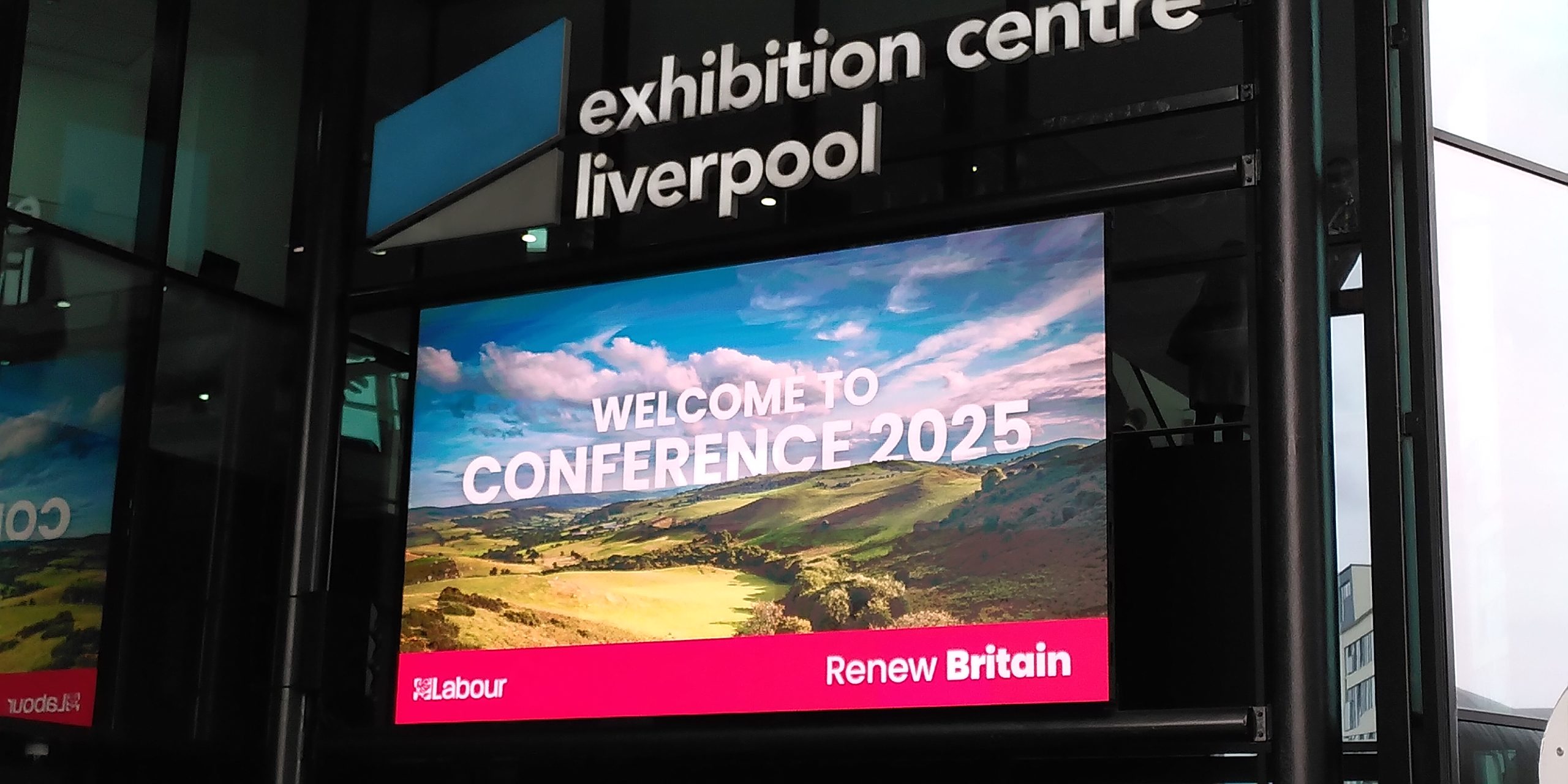
Joint CIEEM event at Labour Conference
On Monday this week (29 September 2025), leading voices from politics, ecology and the development sectors convened at the Labour Party Conference to debate one of the most pressing challenges for Britain’s natural future: how can private sector investment drive the recovery and resilience of nature at a time when the government’s flagship planning bill threatens to undermine environmental protections and nature conservation?
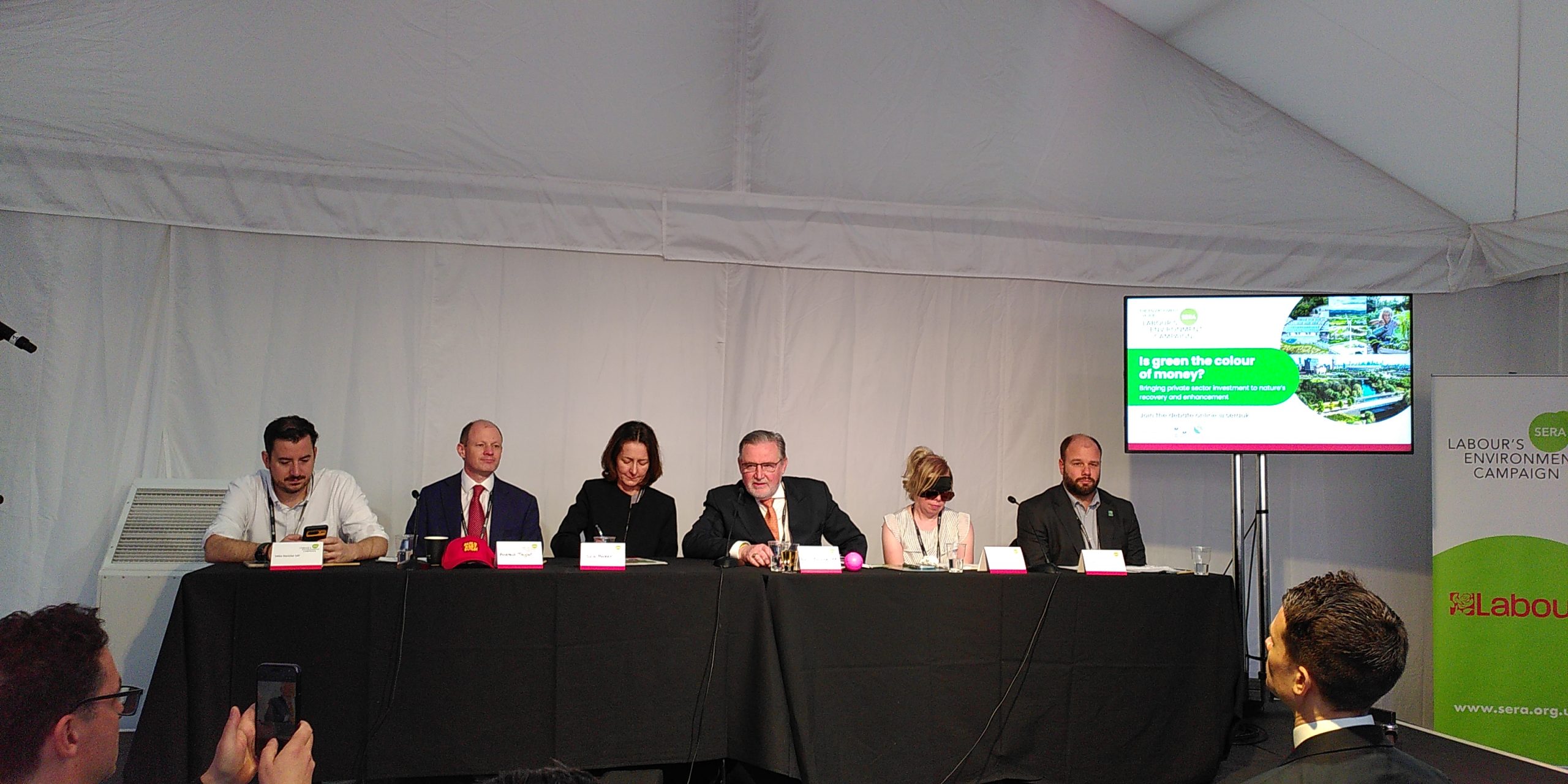
Hosted in the SERA – Labour’s Environment Campaign hub, this panel session was sponsored by CIEEM and Mott MacDonald. The discussion, “Is Green the Colour of Money?”, brought together a distinguished panel of experts to examine the role of business in restoring and safeguarding the UK’s natural environment.
Chaired by Barry Gardiner MP, the session featured contributions from:
- Mike Reader MP, Member of Parliament for Northampton South
- Ben Kite, Chair, CIEEM Strategic Policy Panel
- Dr Jo Smith, Chief Executive of Derbyshire Wildlife Trust
- Andrew Taylor, Group Planning Director at Vistry
- Julia Baker, Technical Director at Mott MacDonald
Throughout the discussion, panellists grappled with critical questions around the maturity of natural capital markets, the risks of profit-driven degradation, the policy levers needed to unlock sustainable investment, and the risk of undermining these markets just as they are getting started.
The conversation was grounded in real world examples and underscored a growing consensus: nature is not only a moral imperative, but also an economic and social one.
Ben Kite, Chair of CIEEM’s Strategic Policy Panel, called for clearer national guidance and stronger incentives to attract and sustain mainstream investment in the sector: “We need to reframe the context of the conversation about nature and development. We need both. We need to move beyond the name calling, nature-bashing, and animosity [between policy-makers and environmentalists] and see nature and development working together. The Planning and Infrastructure Bill (PIB) is fixable – and we can help do just that.” Ben referenced the planning system solutions briefing paper that CIEEM has published.
Andrew Taylor called for a clarity of approach from a national policy perspective so that developers don’t have a multitude of approaches across different planning authorities to deal with. And whilst he said that he disagreed with Ben’s suggestion that Part 3 of the Planning and Infrastructure Bill (PIB) be restricted to just diffuse impacts so that it gives clarity to developers and nature markets, saying that the details can come later, it appears that they both want that clarity from Government but just at different times in the process.
Adding a parliamentary perspective, Mike Reader MP highlighted the potential of the Planning and Infrastructure Bill (PIB) to reshape the landscape of environmental finance. He said: “There is a role to ensure Government delivers on building the homes we need but also protecting the environment. We are currently seeing nature depletion in the UK, and we need new ideas to take to DEFRA to improve nature resilience and protect our natural environment. We need to build – but we must build with integrity and ethics.”
It was disappointing that Mike Reader could not stay for the whole event, especially after pronouncing that Labour needed to stop tinkering and instead do a “root and branch” review of environmental regulation that is holding up development. He failed to note that the PIB just adds another layer of complexity and that if the Government had consulted with the environmental sector – they did not consult on the Bill – they would have found that we are willing and open to finding true win-wins for nature. Especially galling was the fact that he said that there is so much ecological, engineering and other expertise in the UK that it should not be difficult to get this right – again failing to mention that Government not only didn’t consult with the environmental sector on the radical changes proposed in the PIB, but also continues to rebuff offers of engagement.
Julia Baker noted that Part 3 of the the PIB is causing “policy uncertainty” but that it there are elements of the PIB such as moving to a single lead regular that will be helpful.
Jo Smith said that the PIB could be the catalyst for landscape-scale change for nature, but that as it stands is just causing confusion.
The event concluded with a call to action from Barry Gardiner MP, who reiterated that “nature is the basis of our economy, and the Treasury needs to understand the value of natural capital.” He cautioned that unless this shift happens, “there is a danger that the Nature Restoration Fund creates a smorgasbord for developers to pick and choose the easier and cheapest options [at the expense of the environment].”
Read more about CIEEM’s experience of the Labour Party Conference 2025.