National Marine Week: Citizen science – without getting wet
We hope you’ve enjoyed this series of blogs, inspired by National Marine Week and highlighting not only the variety of benefits of citizen science initiatives, but also highlighting some of our favourite projects. It wouldn’t be a complete series, however, if we didn’t also share some of the options available for people who aren’t able to get out into the field.
You Don’t Need a Beach to Love the Ocean
During National Marine Week, we are of course celebrating the amazing marine and coastal life around the UK – but we’re also celebrating people. We want to particularly celebrate the idea that everyone, no matter where they live or how mobile they are, or how much time they have available, should have the opportunity to get involved. So, whether you’re in a city flat, a landlocked village, a classroom, or your nan’s front room, here are some ways you can join in when you need a virtual hit of “Vitamin Sea”.
Marine Science from your Sofa
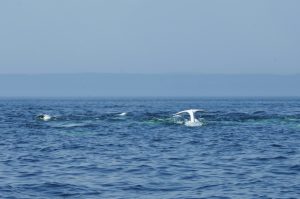 The first stop on your quest to do some marine science without leaving the house, has to be Zooniverse. This website lists many, many projects you can sign up to help with, on a wide variety of different topics. Just make an account and join the fun. Projects include helping identify and count sharks around New Zealand, monitoring bottomfish in Hawaiʻi, counting penguins and identifying beluga whales – to name a few. Next time you have a bored moment, take a look – you never know what you might find.
[above] Beluga Whales (photo credit: Karl-Heinz Muller)
Another website which offers a whole host of online citizen science opportunities is BIIGLE.party. This website focuses on marine image analysis, allowing you to help marine scientists by studying their photos. Their largest project is called “ Into the Deep ” and allows you to analyse images captured by deep sea cameras, labelling the species seen in these deep sea habitats. The project is easy to follow and allows you to investigate the deepest and most mysterious parts of our oceans from the comfort of your home.
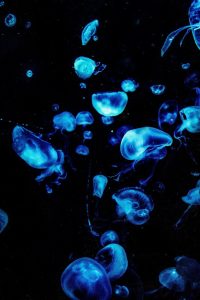 [left] Deepsea Jellyfish (photo credit: Nicole Avagliano)
If you are looking for something closer to home, you can get involved with the smaller scale UK project “ Cuttlebone ”. This project is investigating cuttlebones washed up on the shores of the North Sea for teeth marks left by predators including dolphins and shark species. This information can then be used to study the position of cuttlefish in the local food chain, and what is needed to protect them from harmful activities. You can annotate the images by outlining the different teeth marks with the relevant colours all from your phone or laptop.
So, whether you’re diving into deep-sea imagery, tracking sharks, penguins and beluga whales or investigating tooth marks on cuttlebones, there’s a place for you in marine science—no wellies required. Citizen science is for everyone, everywhere. We hope this series has shown just how many ways there are to stay connected to the ocean, even if your nearest coastline is miles away.
Happy (virtual) exploring!
This series of blogs has been written by members of the Marine and Coastal Special Interest Group. If you would be interested in joining the SIG committee or getting more involved, please contact CIEEM Member Networks ([email protected]) or the Convenor, Claire Lacey
About the Authors
Athena Allen BSc(Hons), MSc, ACIEEM is a Marine Ecologist at NatureBureau Ltd, a firm of environmental and ecological consultants. Athena’s work includes supporting the delivery of European marine legislation such as the Marine Strategy Framework Directive, delivering shark conservation projects for the German Government, and contributing to research projects on her specialised taxonomic group of choice, cephalopods. Contact Athena at: [email protected]
Claire Lacey, BSc (Hons), MSc, Ph.D, C.Env, MCIEEM, MRSB, AFHEA Claire is a researcher at the Marine Mammal Research Program, University of Hawaiʻi, where she specializes in estimating the abundance and examining the distribution of small delphinid species. Prior to moving to the USA, she previously worked both as an environmental consultant and with an NGO. She has worked on marine mammals for over 20 years, and is the Convenor of the CIEEM Marine and Coastal Special Interest Group. Contact Claire at: [email protected]