National Marine Week: Citizen Science and the Importance of Getting People Involved…
Welcome to the first in a series of blogs by members of the CIEEM Marine and Coastal Special Interest Group celebrating National Marine Week, which runs from 26th July – 10th August 2025. Over the course of the next two weeks, weʻll explore the week’s origins and highlight inspiring citizen science projects helping to protect the UK’s marine and coastal environments.
The History of National Marine Week
National Marine Week is an annual event encouraging everyone to connect with the sea. It was set up in the 1970ʻs by The Wildlife Trusts after they saw a need to focus on marine conservation. Originally focused on ocean education, it has grown into a nationwide effort involving beach cleans, talks, and citizen science. This series will focus on the vital role of citizen science in marine conservation across the UK.
The rise of citizen science
The term “citizen science” refers to the publicʻs voluntary participation in scientific research, often alongside professional scientists, to address real-world problems. It has a rich history in the UK, with early examples dating back to the 18th-century naturalists and scientists who documented plants, animals, geography and paleontology. Current projects are often more focussed on collecting large scale datasets, one familiar example would be the RSPBʻs Big Garden Birdwatch. These initiatives offer myriad opportunities, contributing to data collection, providing educational experiences for participants, and raising public awareness about environmental and social issues. In addition, when conducted correctly, these projects can also provide high quality data which can contribute to policy and decision-making, often in a more cost-effective manner than traditional forms of science. They can also improve public science literacy, and lets be honest – anything that helps fight the wave of misinformation can only be a good thing.
Why marine citizen science matters
The marine environment is vast, dynamic, and often costly to study — making citizen science especially valuable. With thousands of miles of coastline and an engaged public, the UK is well placed to harness local knowledge. From snorkellers surveying seagrass to families recording rockpool finds, citizen science offers meaningful ways to support marine research and conservation.
Real-world impact: UK success stories
Across the UK, citizen science has already proven its value in contributing to marine conservation. One standout example is Capturing Our Coast, a national initiative that trained over 3,000 volunteers to collect biodiversity data from UK rocky shores. Set up in 2016, this huge cohort of volunteers continue to collect data across UK coasts, providing a baselined to explore responses to environmental change, and filling knowledge gaps.
Another long-running effort is Seasearch, where volunteer divers survey underwater habitats and species. Since its inception, Seasearch has built one of the most comprehensive databases of UK subtidal and coastal biodiversity — with data regularly used in Marine Conservation Zone (MCZ) proposals and monitoring. It’s a powerful example of how skilled, committed volunteers can generate data robust enough to influence policy and management.
You donʻt have to be a diver; Shoresearch, led by The Wildlife Trusts, has enabled thousands of participants to contribute to intertidal shore monitoring, including tracking invasive species. The data from this project help with monitoring of the effects of pollution, climate change and invasive species, contributing to the designation of Marine Conservation Zones.
These projects demonstrate that when designed well and supported appropriately, citizen science isn’t just “nice to have” — it can be a critical part of how we understand and monitor marine habitats.
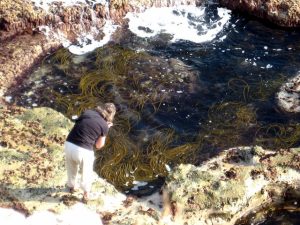 Photo Credit: Sarah Smith.
Building a marine-literate public
These projects are not only helping to fill critical knowledge gaps, but they’re also fostering a deeper connection between people and the sea. When individuals get involved in recording what they see, they become more aware of the changes in their environment — and more motivated to protect it. Data are great, but on top of that, these initiatives foster a sense of connection with the sea. People who record seaweeds, spot jellyfish, or clean up beaches often find their perspective shifts — the coastline becomes not just a place of beauty, but a place of responsibility and curiosity. That growing sense of ownership is vital, especially in the face of global challenges like biodiversity loss, plastic pollution, and climate change.
By involving people from a wide range of backgrounds, citizen science can also make marine science more inclusive. Projects like the Big Seaweed Search (run by the Natural History Museum) offer an entry point for those who may never have thought of themselves as “scientists”. And that’s one of the greatest strengths of this approach: it invites everyone to be part of the solution.
As we celebrate National Marine Week, these citizen science successes remind us that meaningful change often starts with simple actions — noticing, recording, and caring. By working together, scientists, communities, and volunteers can create a richer picture of our seas and a stronger foundation for protecting them. Stay tuned over the next two weeks as we highlight some examples!
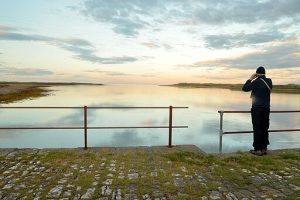 Photo credit: Andrew Tyron
About the Author
Claire Lacey, BSc (Hons), MSc, Ph.D, C.Env, MCIEEM, MRSB, AFHEA
Claire is a researcher at the Marine Mammal Research Program, University of Hawaiʻi, where she specializes in estimating the abundance and examining the distribution of small delphinid species. Prior to moving to the USA, she previously worked both as an environmental consultant and with an NGO. She has worked on marine mammals for over 20 years, and is the Convenor of the CIEEM Marine and Coastal Special Interest Group.
Contact Claire at clacey2@hawaii.edu